A finish is only one part of the cabinet.
A cabinet brings several forms of making together: the enclosure, the frame or front, the drawer box, the exposed edges and the final surface. Looking closely at these parts makes the construction easier to understand than a room photograph alone. The examples below come from the supplied cabinetry catalogs and show specific assembly details.

Separate the parts before comparing the materials.
A wood-colored front does not identify the cabinet core. A painted front does not identify the drawer box. Describe each component in its own right and then explain how the pieces meet.
- The enclosure
- Sides, top or rails, base, back and shelves define the cabinet box. Exposed ends may have a different decorative role from internal panels.
- The visible face
- A slab, framed, inset or shaped front changes the appearance and the way the opening is detailed. The front surface and its underlying construction are separate choices.
- The moving storage
- Drawer boxes, hinges, slides and internal fittings form their own assembly. The useful space depends on their relationship with the surrounding cabinet.
From shaped timber to an assembled drawer.
These supplier photographs show identifiable features at three stages. They are useful for explaining construction, without turning a catalog example into a universal specification.


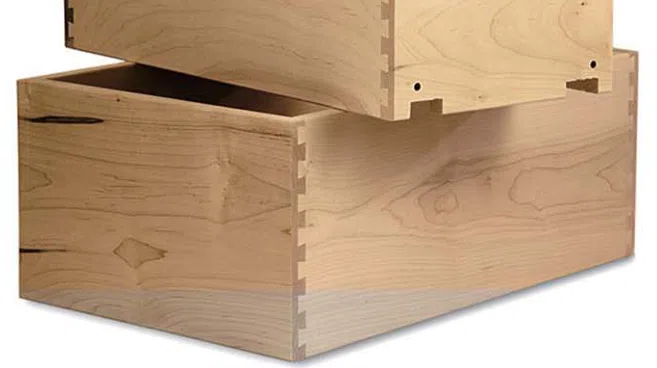
Supplier workshop and product photographs / Hongzhou catalog, actual PDF page 23. The photographs illustrate construction options from a partner-factory catalog.
Read the joinery together with the final surface.
A room image gives the finish most of the attention. A component review should also make the edges, rear face, joints and hardware position visible.
Rails, stiles, center panel and the relationship at each corner.
Front construction, finish on the face and edge, profile and opening arrangement.
Side joints, base panel and the connection to the decorative front.
Box material and construction, usable internal size, slide model and fixing arrangement.
A separate edge band, solid lipping, shaped coating or other return detail.
The selected edge material, color match and treatment at corners and cut-outs.
Grain direction, transitions between fronts and visible returns.
Selected veneer, substrate, finish, reverse face and matching approach.
Surface color, sheen, texture and the way it follows the edge.
The complete selected surface system and representative sample, rather than only a color name.

Check the assembled front as well as the sample.
This existing workshop reference shows fronts prepared for an alignment check. A finish sample can establish color and texture, while an assembled check shows how the separate fronts relate to one another. Review the visible gaps, repeated lines and edge transitions together with the current drawing.
Make each check specific to the component.
The review is clearest when it names a visible feature and the record used to assess it.
- Before production
- Compare the selected front profile and surface sample with the room elevation. Include an edge or corner sample where that detail is central to the design.
- During assembly
- Check how the box, front and hardware work together. Open the drawer or door, inspect the clearances and compare the result with the agreed configuration.
- Before packing
- Check identification, finish condition, matching visible components and the protection of shaped edges, glass and other vulnerable parts.
Read the detail without overreading it.
Does a dovetail joint prove the quality of the whole cabinet?
It identifies one joinery method in one component. The cabinet must still be assessed as an assembly, including the material, workmanship, finish, fixing, hardware and suitability for its intended use.
Can I identify the substrate from a room photograph?
Usually not. The visible face may cover a different core. Use the component specification and an appropriate sample or section to identify the actual assembly.
Are these supplier examples the specification of every Arcaya project?
No. They illustrate construction options from the partner-factory library. The materials, joinery, fittings and review scope of a project are recorded with its drawings and proposal.
Choose the detail that matters to your project.
Share the appearance you want together with the component details you would like to discuss, from a framed front to a shaped edge or drawer interior.
Start a projectSee the project process →