Find the cabinetry language
that feels right.
Explore eight design directions, then connect the look to door profiles, materials and collections. A style sets the visual direction; a collection connects a design language across rooms.
Eight ways of looking at cabinetry.
Compare eight complete style guides through proportions, surfaces and details. Connect the look to a collection, material shortlist and useful project brief.
Directions are tagged to rooms as their content is completed.
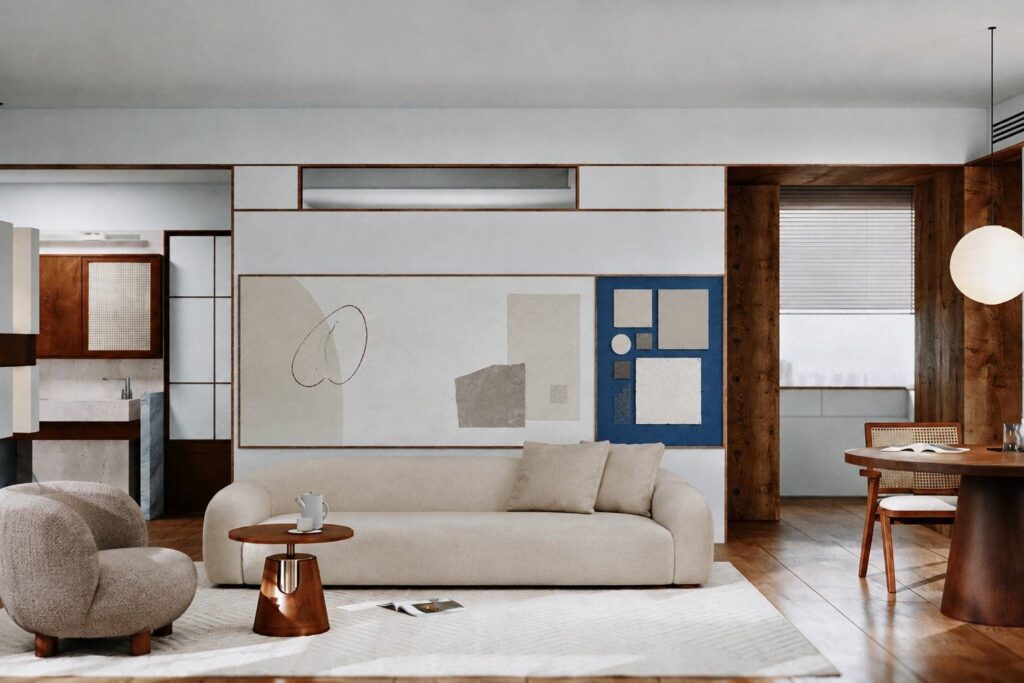
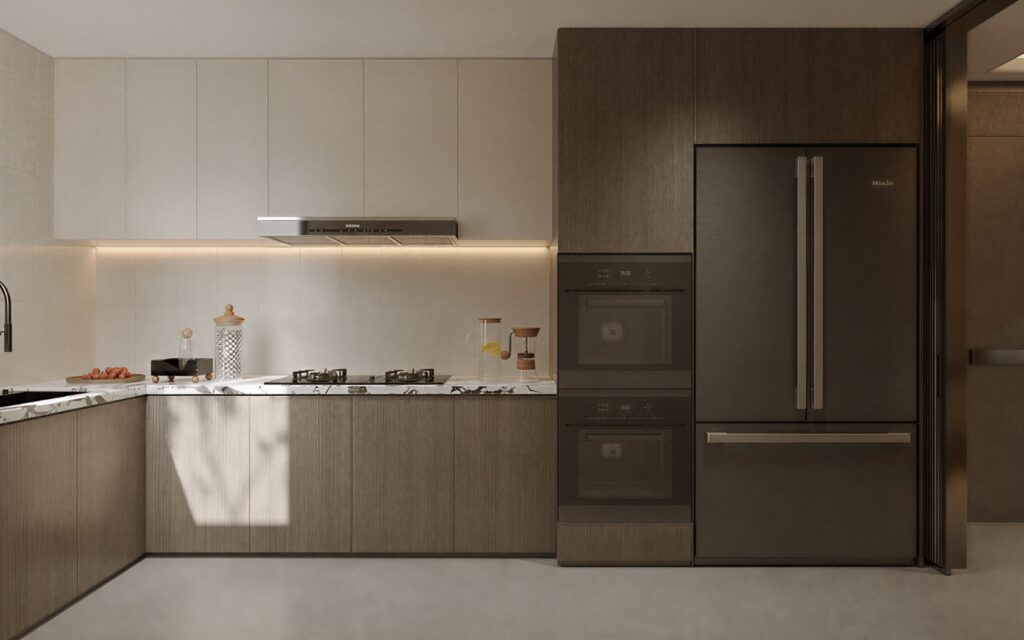


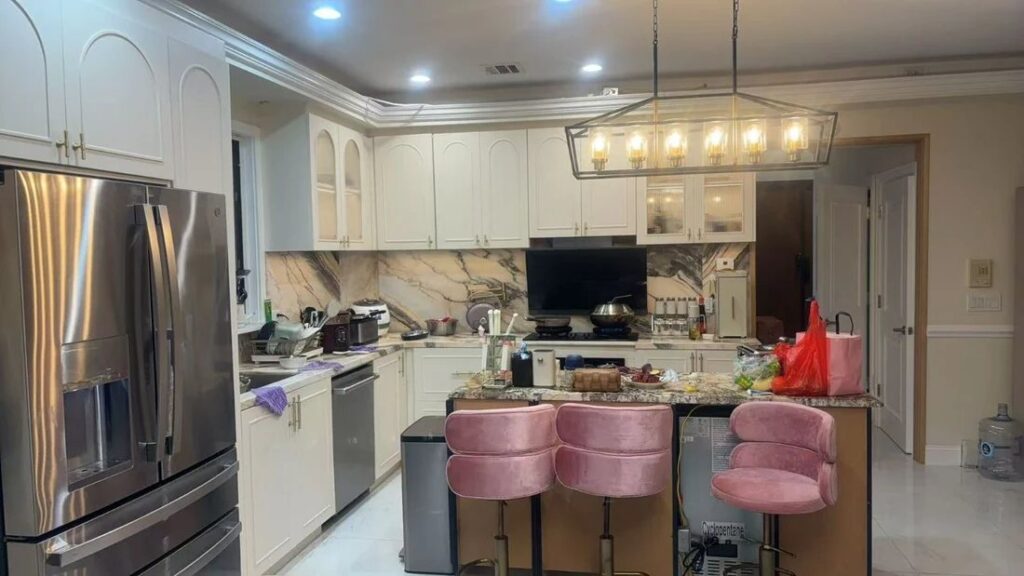
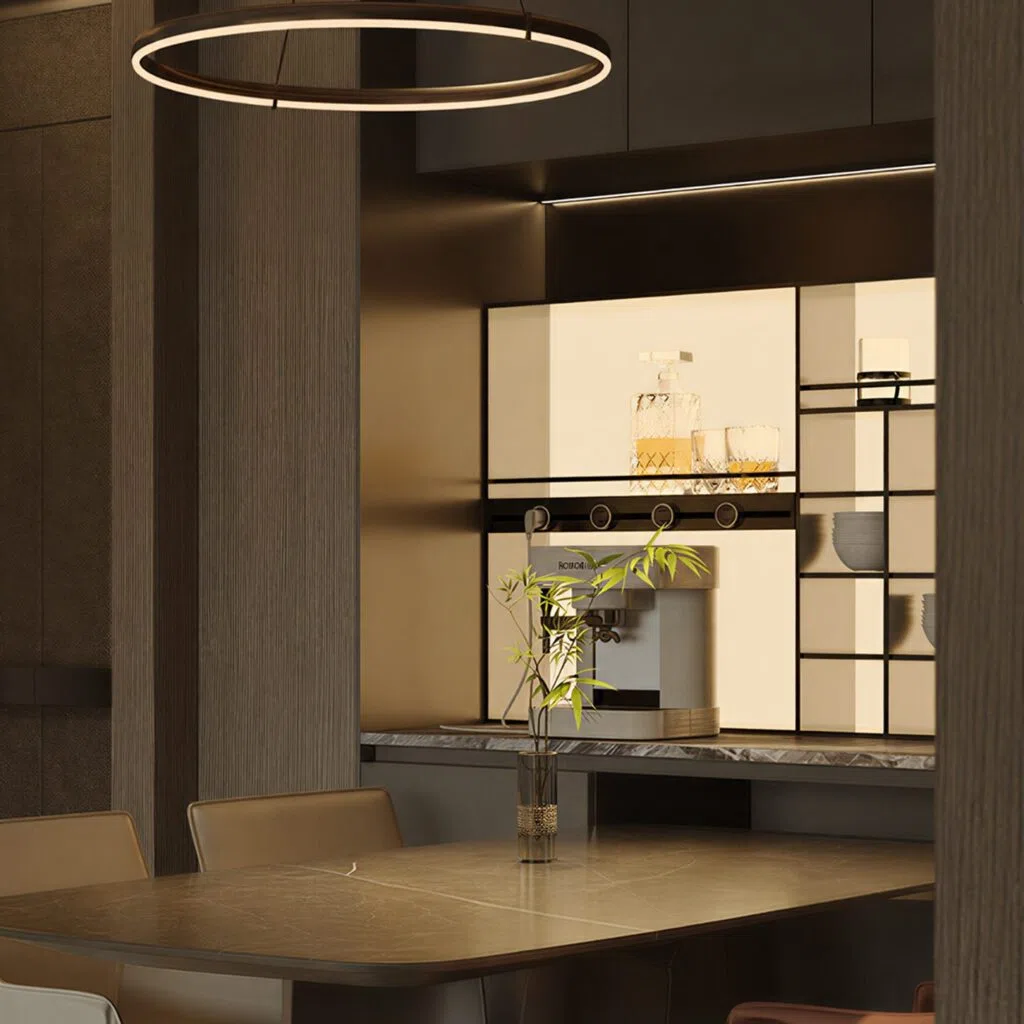
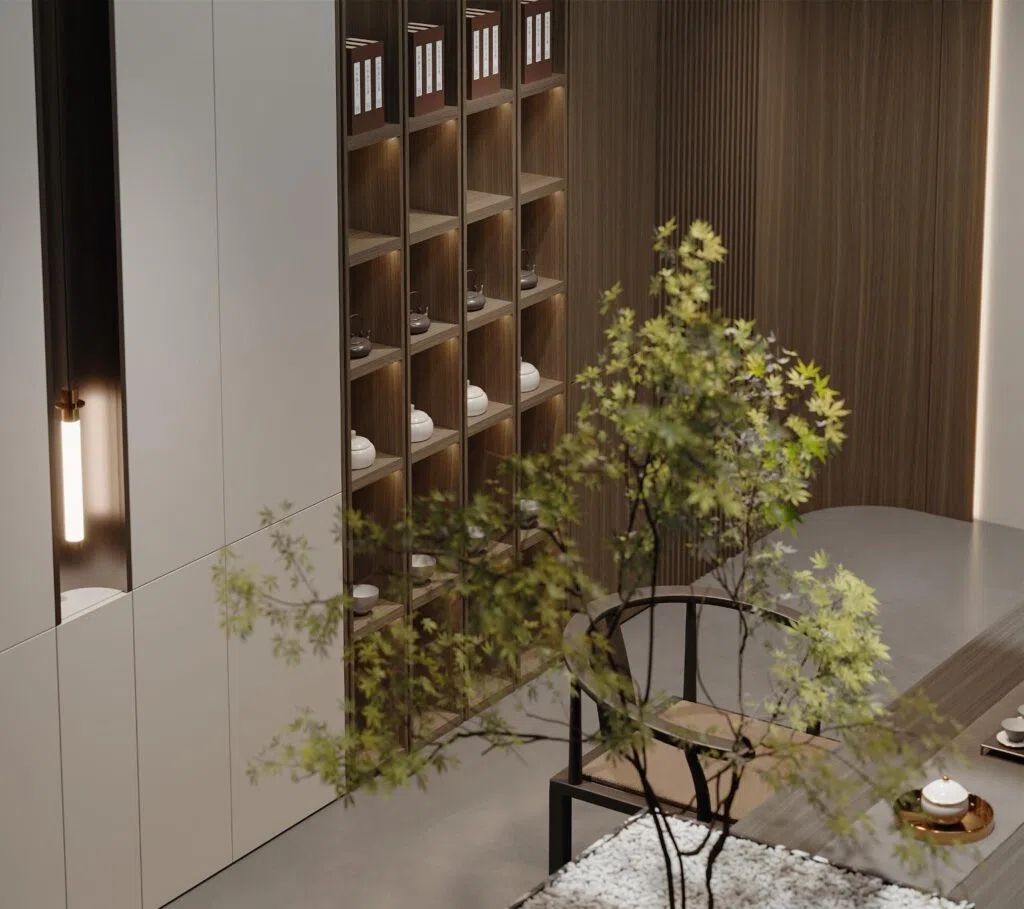
Japandi and Contemporary Chinese use supplier catalog renderings. Other images are existing site references. Style names describe editorial design directions; they do not identify a product specification.
Close neighbours, different decisions.
Warm Contemporary
Can be richer and fuller in volume. Wood as the main face with a solid-color partner; grain direction, handles and radii are the levers.
- Wood face + painted partner
- Fuller, more layered rooms
- No assumed cultural reference
Japandi
More restraint and more negative space; one texture, fewer surface changes, lighter proportions. Images must match; nothing is relabelled as Japandi.
- One unified texture
- Fewer surface changes
- Everyday storage kept visible
Transitional
Classic doors simplified: narrower frames, shallower profiles, contemporary hardware and countertop edges. Which details make the whole feel cleaner is the question.
- Frame width and door depth reduced
- Current hardware
- Shaker is one option, not a rule
Classic & Traditional
The complete classic set: cornice, toe kick, end panels and display units composed with symmetry. Broad classic composition, without regional or workshop claims.
- Cornice, toe kick, decorative ends
- Symmetry and hierarchy
- Framed display units
Three steps from a look to a specification.
Pick the style whose cues match the project. The style guide explains what the cues mean in doors, color, texture and hardware.
Each direction links to the collections that carry it and to the material records behind them: species, finishes, edges.
Start a project brief from the style or the collection. Nothing is pre-selected that has not been confirmed.
Japandi in cabinetry
Use a restrained palette, generous empty space and simple transitions. Plan the storage first so everyday items can be put away without covering the surfaces that give the room its calm.
- Turn the look into a brief
- Choose the wood tone and grain direction together; compare a flat front with a discreet pull and keep the wall, toe kick and countertop junctions visually quiet.
- Collection starting points
- Natural / Linear
French-Inspired in cabinetry
Build the character through frame proportion, selected curves and the relationship between tall units, openings and trim. A pale finish alone does not define this direction.
- Turn the look into a brief
- Compare the frame width, inner profile, crown detail and handle shape in one sample board. Decide where decoration should be concentrated and where plain fronts provide a pause.
- Collection starting points
- Heritage / Frame
Contemporary Luxury in cabinetry
Let a few contrasting surfaces and careful junctions carry the design. Glass, wood-led fronts and considered display lighting can create depth without making every element a feature.
- Turn the look into a brief
- Show how the main surfaces meet at edges, corners and reveals. Plan illuminated display and driver access with the storage layout, then review samples under the intended room lighting.
- Collection starting points
- Natural / Vitrine / Sculpt
Contemporary Chinese in cabinetry
Explore wood tone, balanced solid and open areas, and selected lattice or screen-like details in cabinetry for contemporary life. Keep the reference specific to the design rather than treating it as a generic label.
- Turn the look into a brief
- Use elevations to check the proportions of framed openings, shelves and repeated verticals. Combine the visual study with a contents schedule so display, books and concealed storage each have a clear place.
- Collection starting points
- Natural / Linear / Vitrine
Start from the look you already like.
Share your plans, priorities and destination market.
Start a project brief