A place for every part
of the wardrobe.
A wardrobe works through its interior: the hanging bay that keeps a coat clear of the shelf below, the shallow tray that makes jewelry visible, and the drawer that brings folded clothing within reach. Explore these storage families, then combine them around your own collection and daily routine.

Give each type of belonging its own place.
Start with the things you use most. The same wardrobe can combine generous hanging space, compact accessory storage and occasional-use shelves without giving every bay the same interior.
A dedicated uninterrupted hanging bay for coats and dresses.
Keep the lower area clear; choose the rail position from the garments and the reach of the user.
Short-hang sections beside folded storage or a second hanging zone.
Coordinate rail positions with shelves so garments are easy to remove without catching.
Drawers for frequently used items; shelves for larger stacks or occasional storage.
A drawer brings the contents forward. Shelf spacing follows the height of the actual stack.
A shallow compartmented tray for watches, jewelry, eyewear and belts.
Choose the insert around the contents rather than filling every drawer with the same divider.
Visible shelves or individual compartments, with taller spaces for boots and larger bags.
Leave room to lift the item out and preserve its shape.
Four ways to make the interior work harder.
A room view explains the arrangement. The close details explain what each part stores and how it is reached.
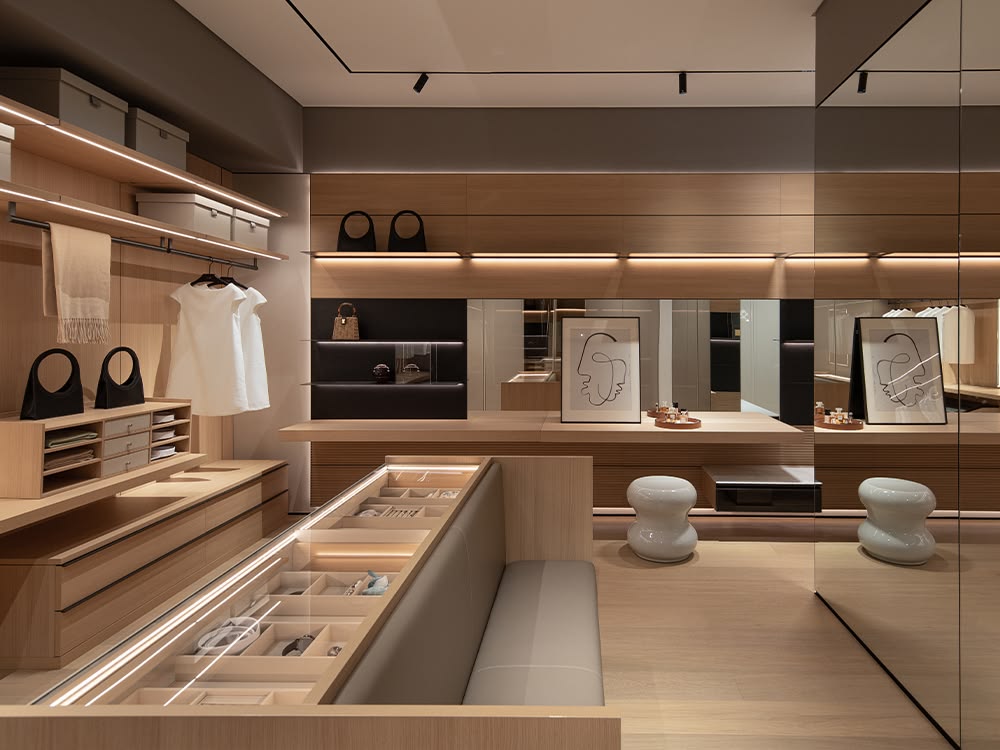


Design references from the supplied image library. Images illustrate arrangements; the selected fittings and internal dimensions belong to the individual project.
Read the wardrobe with the doors open.
Door swing, drawer travel and the space used by a person all belong on the same plan. An attractive elevation can hide a drawer that cannot open fully beside a wall or an island that crowds a hanging bay.
- At a hinged door
- Allow the door and handle to clear adjacent walls, drawer fronts and nearby furniture. Locate internal pull-outs where the open door does not obstruct them.
- At an island
- Map the drawer opening on each side together with the route through the room. A glass top needs a practical cleaning route as well as a visual role.
- At the top and bottom
- Place daily-use items within comfortable reach. Use upper shelves for seasonal storage and check that low drawers remain easy to see and use.
Choose what stays on display.
Closed fronts keep the room visually calm. Open shelving makes frequently used pieces visible. Glazed doors add a display layer while retaining a physical enclosure. A mixed arrangement lets shoes, bags, clothing and personal items each have an appropriate setting.
List the contents before choosing the fittings.
A simple inventory makes the layout more specific than a list of accessories. Record approximate quantities, the largest pieces and which items are used every day.
- Hanging
- Separate long garments, shirts, jackets and trousers. Include the tallest hanging item.
- Folded and personal
- Group knitwear, bedding, jewelry, eyewear and small leather goods by the way they are used.
- Room and equipment
- Add room dimensions, door positions, lighting intent, mirror needs and the preferred mix of open and closed fronts.
Make the choices fit the routine.
Does every wardrobe need an island?
No. An island is useful when it adds accessible storage and a preparation surface while preserving movement around the room. Wall drawers and a shallow dressing counter can provide similar functions in a narrower space.
Can inserts be chosen after the cabinet layout?
Choose the important inserts early. Their usable width, depth and opening requirements can influence the drawer and bay arrangement. Decorative dividers can often be refined later within that agreed space.
Should bags and shoes always be behind glass?
They can sit on open shelves, behind solid doors or behind glazing. The choice depends on visibility, cleaning and the character of the room; the shelf geometry still follows the items themselves.
Turn your belongings into a better interior.
Share your room plan and a short storage inventory. Add the reference details that matter most, from hanging arrangements to accessory drawers.
Start a projectSee the project process →