Compare the product, not the reputation
Two kitchens using the same hardware brand can feel very different. One may use simple concealed hinges and partial-extension drawers; the other may include full-extension slides, assisted opening and complex pull-outs. A brand-only quotation hides those differences.
For an export project, the right comparison covers daily use, installation and later servicing. Ask for an exact fitting schedule before deciding whether an upgrade represents good value. Do not assume every product offered by a manufacturer shares one load rating or one set of features.
Put three proposals on the same schedule
| Question | What to compare |
|---|---|
| Which series? | The named hinge, slide, drawer-box or lift family and its part references. |
| Which movement? | Soft-close, full extension, push-to-open or assisted opening. |
| Which load? | The manufacturer’s rating for the exact model and configuration. |
| Which accessories? | Plates, connectors, synchronization, adjustment and stabilization parts. |
| Which support? | Replacement availability, identification and the installer’s familiarity. |
Blum, Hettich and DTC can be evaluated against these same questions. Avoid making a fixed price-ratio assumption between them: the mix of drawers, lengths, opening systems and accessories can change the comparison substantially.
Spend where the movement is most demanding
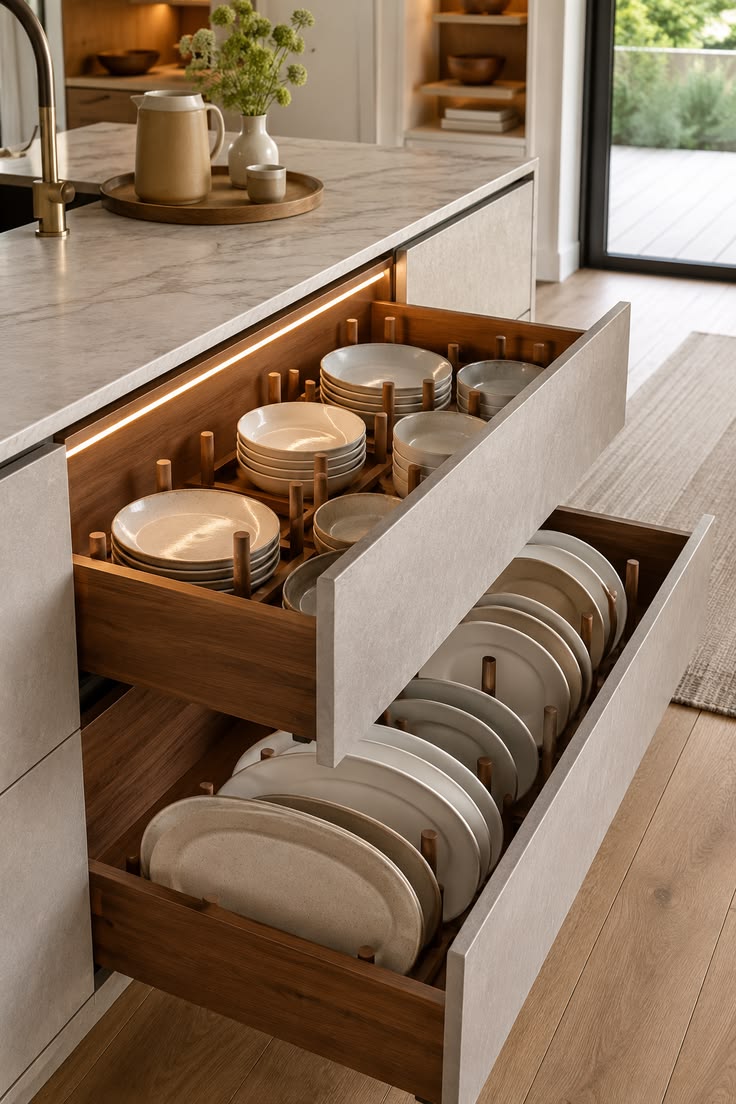
A wide cookware drawer, a daily-use cutlery drawer and a high wall-unit lift are not the same task. Begin with what will be stored and how frequently the fitting will operate. The most useful upgrade may be concentrated on the demanding cabinets rather than applied uniformly to every door.
For example, Blum publishes MOVENTO load classes of 40 kg and 70 kg. That does not mean an unspecified Blum drawer is rated for either figure. Hettich’s AvanTech YOU and slide configurations also have their own technical schedules. Select the exact model after the drawer construction and load have been established.
- Include the drawer box and front in the relevant load calculation.
- Check nominal length and internal cabinet depth.
- Confirm the usable extension and the adjustment method.
- Use the manufacturer’s guidance for wide or heavy fronts.


Hinges need more than an opening angle
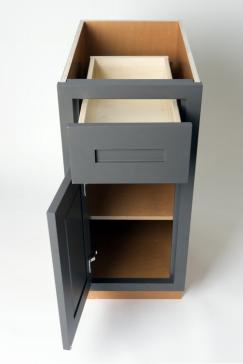
A hinge schedule should include overlay or inset, door thickness, door weight, opening angle and the matching mounting plate. Internal drawers behind a door can require a particular clearance geometry. Thin fronts and heavy glass assemblies need fittings designed for that construction.
Use the manufacturer’s hinge-count guidance with the actual front dimensions and weight. A rule such as “one hinge per fixed amount of door height” is too simple to cover every door material and fixing arrangement.
Plan installation and future replacements
A fitting is easier to service when the installer can identify it. Keep the part reference, adjustment instructions and any agreed spare fittings with the handover information. If a local replacement route is important, confirm that route before the order is placed.
Avoid mixing components merely because they look compatible. The hinge, plate, slide, locking device and accessories should form the specified system. Any substitution needs to be checked for geometry and performance, not just color or price.
Look beyond the hinges and drawers
Corner pull-outs, tall pantry fittings, waste systems and lift-up fronts can affect both the price and the user’s experience. Draw their operating envelopes with neighboring doors, handles and services. Check the actual usable capacity rather than judging the fitting from a closed photograph.
Lighting also needs coordination. A slide or pull-out must not collide with a cable, sensor or driver. It is easier to resolve those positions in the shop drawings than after the cabinet has been delivered.
Make the agreed selection visible
Arcaya’s proposed hardware and any alternatives should be named in the project quotation. This article does not declare a default brand, exclusive partnership or universal upgrade package. Availability and selection are confirmed for the particular order.
Use the hardware guide to build the schedule and bring it into the same approval set as the door construction. That gives the designer, supplier and installer one shared definition of what is being purchased.

