
Begin with what goes inside
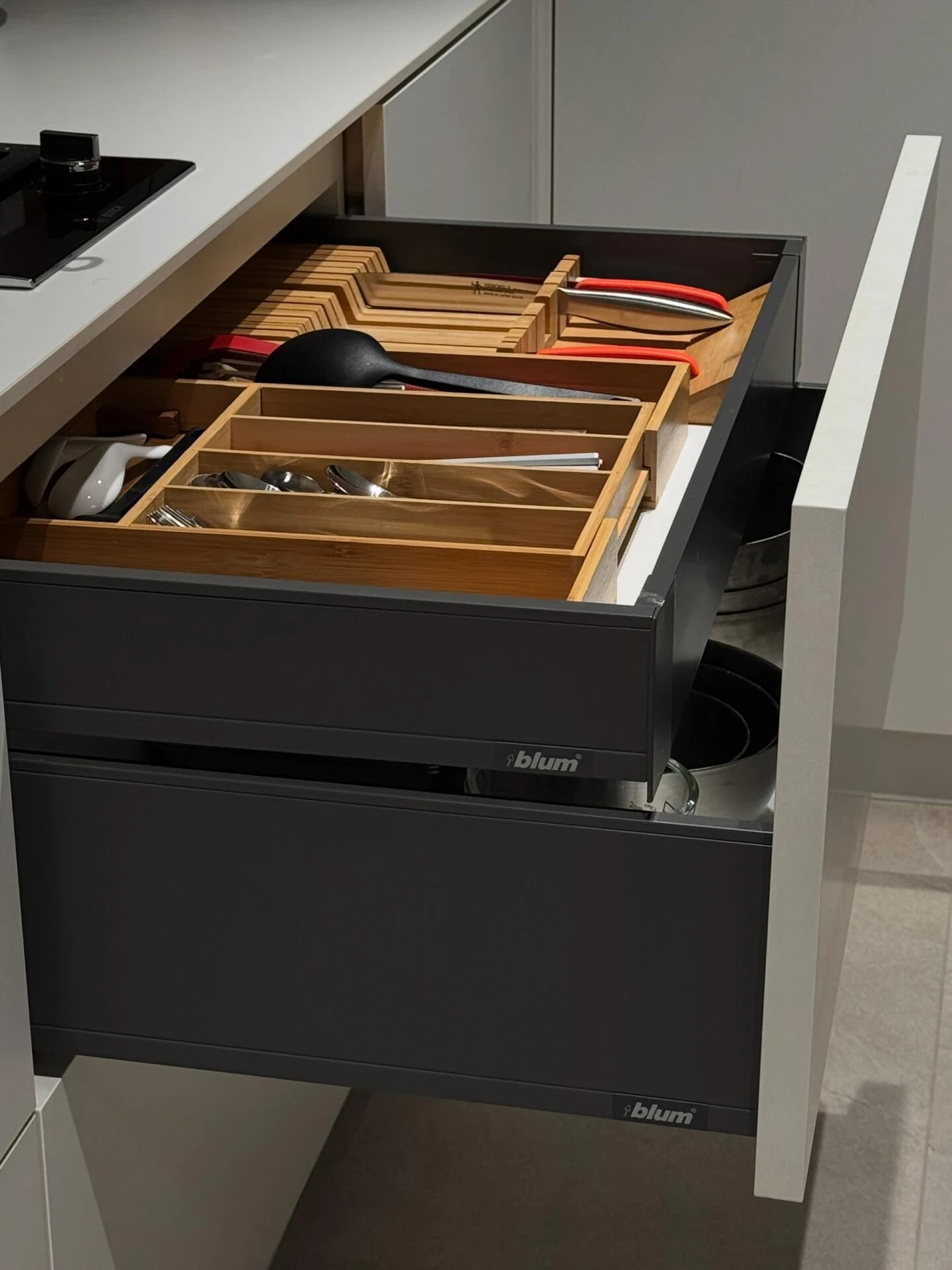
Make a short contents list for each drawer: cutlery, plates, cookware, pantry goods or bathroom items. Note the largest object, how items will be divided and whether the user needs access to the back. A shallow organizer and a deep pan drawer ask different things of the same cabinet frontage.
Work from the usable internal drawer space. External cabinet width does not tell you whether a tray or plate stack fits. Side construction, the slide system, the back and any service cut-out all reduce or reshape the available room. Show the intended organizer on the interior drawing before calling the storage complete.
Drawer slide types at a glance
Drawer slides are called runners in the UK and Europe. The table compares the main types and the load classes most kitchen and wardrobe drawers are specified in.
| Type | Mounting | Typical load | Best for |
|---|---|---|---|
| Side-mount ball-bearing | On the drawer sides; needs ½ in (12.7 mm) clearance each side | 75–100 lb (34–45 kg); heavy-duty to 500 lb | Utility, workshop and budget cabinetry |
| Undermount (concealed) | Hidden under the drawer box; usually soft-close | 66–155 lb (30–70 kg) | Kitchens and furniture-grade drawers |
| Metal drawer system | Box sides and slides supplied as one system | 88–155 lb (40–70 kg) | Kitchens, wardrobes and bathroom drawers |
| Center-mount | One slide under the middle of the drawer | 25–35 lb (11–16 kg) | Light furniture drawers |
| Item | Typical value |
|---|---|
| ¾ extension | Opens about 75% of the drawer length |
| Full extension | Opens 100%; the standard for kitchen drawers |
| Over-travel | 100% plus about 1 in (25 mm), to clear an overhanging countertop |
| US slide lengths | 10–28 in in 2 in steps; 21–22 in for a 24 in deep base cabinet |
| European lengths | 250–650 mm in 50 mm steps; 500 mm for a 560 mm deep carcass |
| Load class, standard drawer | 66 lb (30 kg) |
| Load class, pot and pan drawer | 88–110 lb (40–50 kg) |
| Load class, wide drawer or pantry pull-out | 155 lb (70 kg) |
A load rating applies to the slide pair at its tested length and width, not to the drawer box or the cabinet side. For wide drawers above about 36 in (900 mm), ask for a synchronizing bar or a stronger load class.
Compare extension and opening method separately
Full extension can make rear contents easier to reach. Partial extension may be suitable for a different task or product range. Opening and closing functions are separate decisions: a drawer can use a handle, a mechanical release or another compatible opening system. Do not assume that “soft close” includes push-to-open.
Hettich's slide-system overview separates product families and applications. Use the selected series documentation to establish extension, load classification and adjustment. A rating attached to one product should not be presented as a promise about every slide sold under that brand.
Read the capacity in context
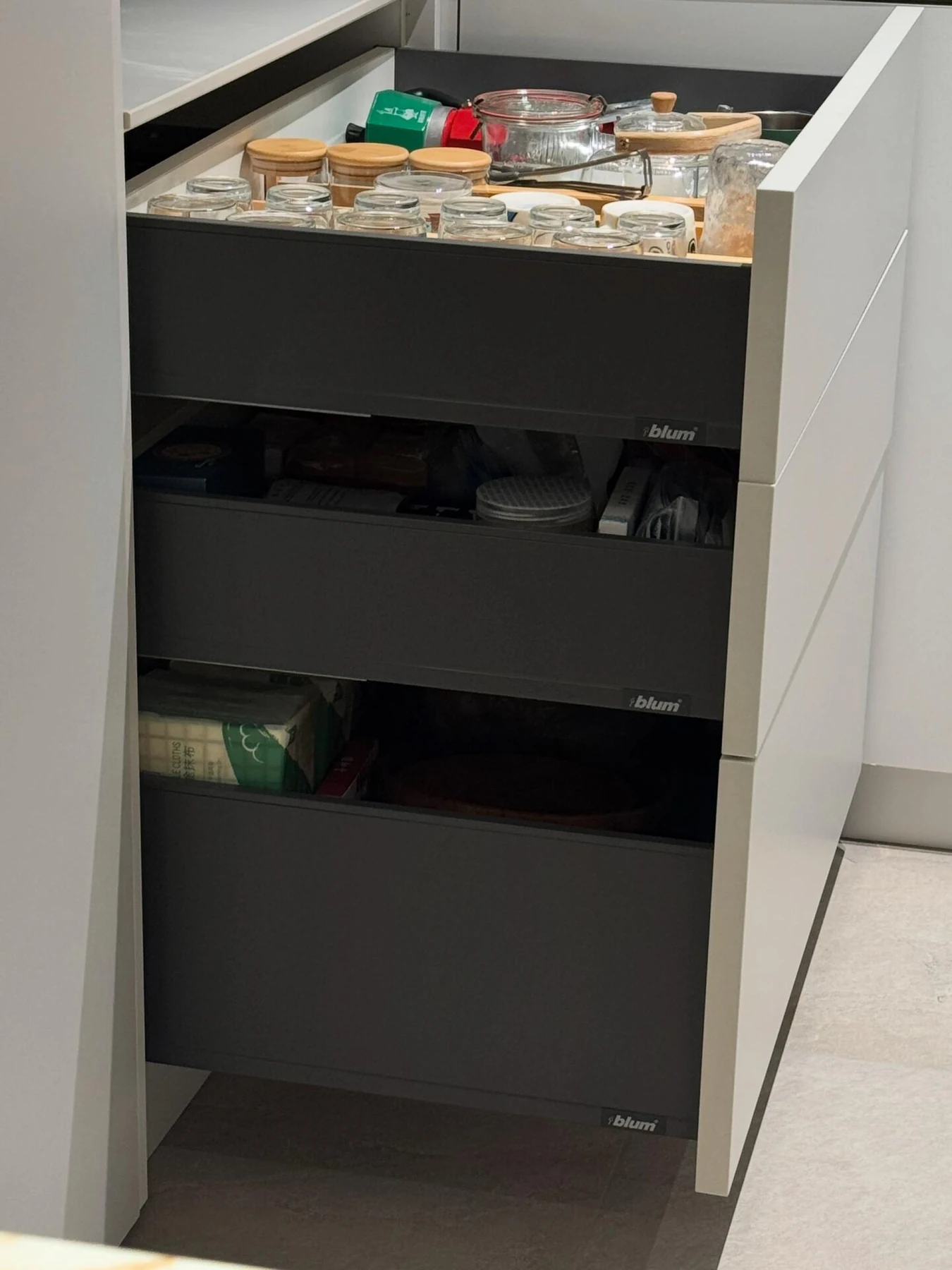
Ask what the quoted rating applies to and how the manufacturer's application limits relate to the proposed drawer. Width, depth, construction and intended contents matter alongside the slide. A high nominal capacity cannot rescue a weak drawer bottom, a poor fixing or an incompatible cabinet detail.
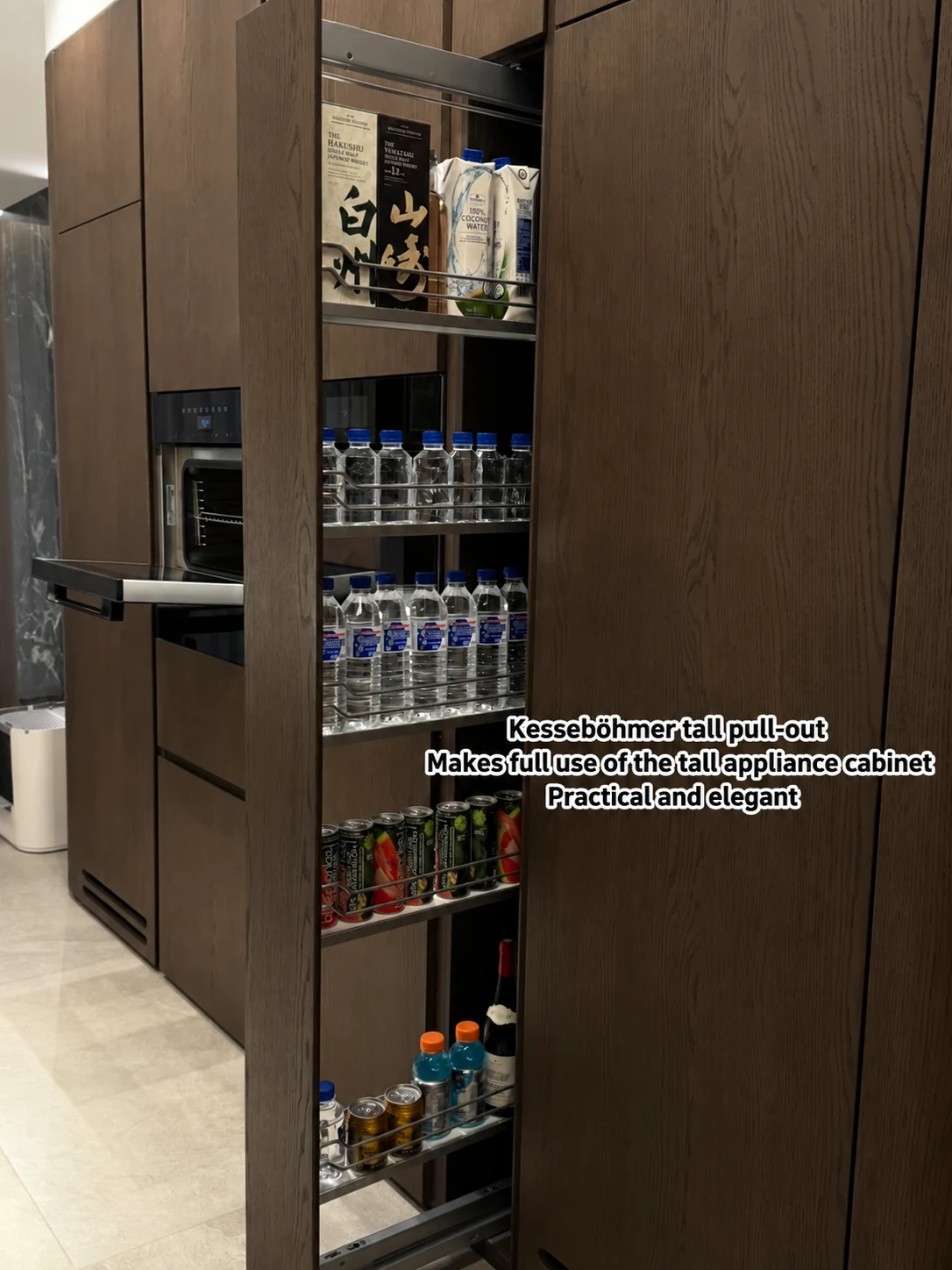
For a wide drawer, discuss sideways stability and the approved construction. For a tall pull-out, use the system designed for that application rather than treating it as a deep ordinary drawer. The brief should describe the use without inventing a capacity; the approved product and construction provide the technical basis.
| Question | Evidence to request |
|---|---|
| Which slide is included? | Brand, series and product reference |
| Which drawer does it serve? | Cabinet reference and drawer construction |
| What movement is required? | Extension and opening/closing function |
| Which accessories are included? | Locking devices, stabilization and organizer entries |
| How is it serviced? | Removal, adjustment and replacement information |
Check the space around the moving front
A drawer needs more than a clear opening in its cabinet. Its front can meet a projecting handle, a perpendicular cabinet or a nearby appliance. In a bathroom, the trap and pipework may require a shaped drawer. At an island, a stool placed in front of a drawer can prevent everyday access.
Draw the drawer fully open on the plan, then add the person using it. Coordinate any corner cabinet and adjacent dishwasher at the same time. A useful review can be as simple as opening the sample drawer while carrying the items that will live there. See kitchen corner storage for intersecting movement checks.

Approve a representative assembly
Where a drawer is important to the design, review the assembled box, front, slide and organizer together. Check removal and reinstatement, the quality of alignment and the feel of the opening movement. A loose mechanism or a showroom drawer of a different size cannot establish every detail of the ordered assembly.
Record the accepted front gap and the adjustment method through the appropriate drawings and product information. Keep any sample approval separate from unconfirmed cabinet dimensions. For imported cabinetry, identify who supplies the fittings, who installs or adjusts them, and how replacement parts will be identified after delivery.
Inspect operation at handover
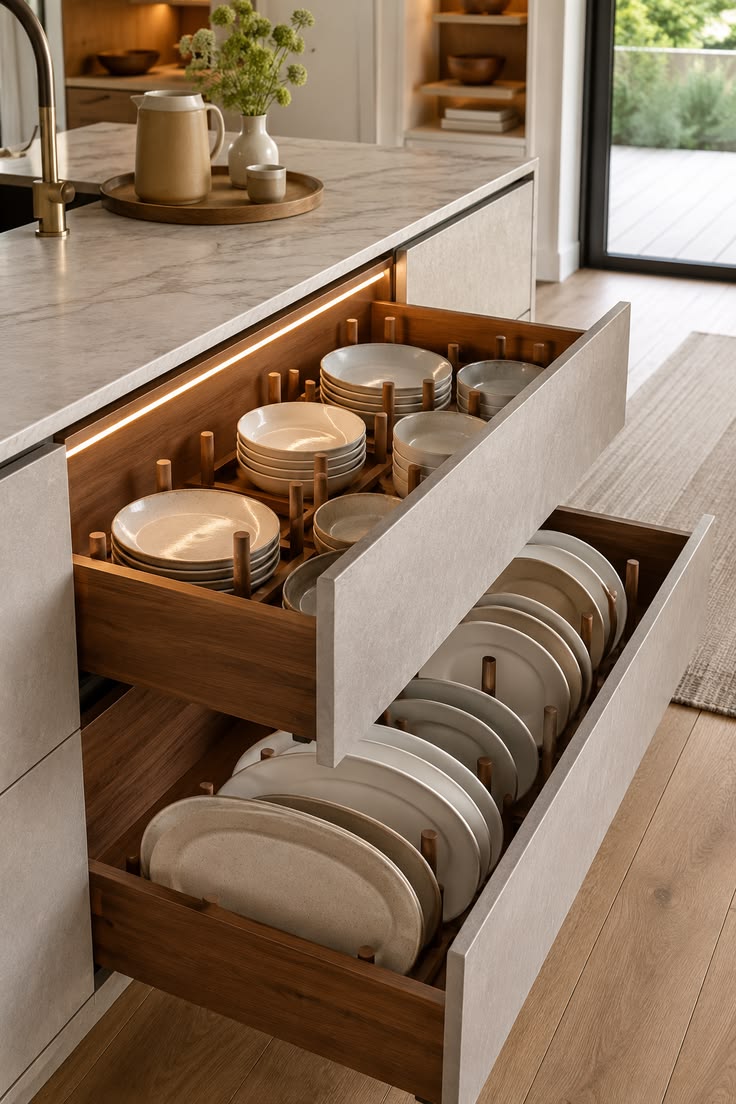
Open each drawer, check the front alignment and inspect its travel with a representative everyday arrangement. Look for rubbing, loose fixings, an organizer that prevents closing or a drawer that meets another front. Confirm the selected soft-closing or opening function operates as intended.
Use the manufacturer's procedure for adjustment and removal. Report faults by cabinet and drawer reference, with a short video when movement is the issue. Store the fitting schedule with the room drawings. That small record is more useful for future service than an invoice that only says “branded slides.” Continue with reading a cabinet spec sheet to connect the fitting entry to the rest of the order.
Questions before approval
Does full extension mean the whole drawer is useful?
It improves access, but the box dimensions, organizer and surrounding room still determine what can be stored and reached. Check the complete open arrangement.
Is the organizer normally included?
Only the written scope settles that. List trays, dividers and other accessories separately so a photograph does not become an assumption about the price.
Can all push-to-open systems use the same slide?
Compatibility is product-specific. Ask the supplier to identify the complete approved combination and demonstrate its operation on the intended drawer assembly.