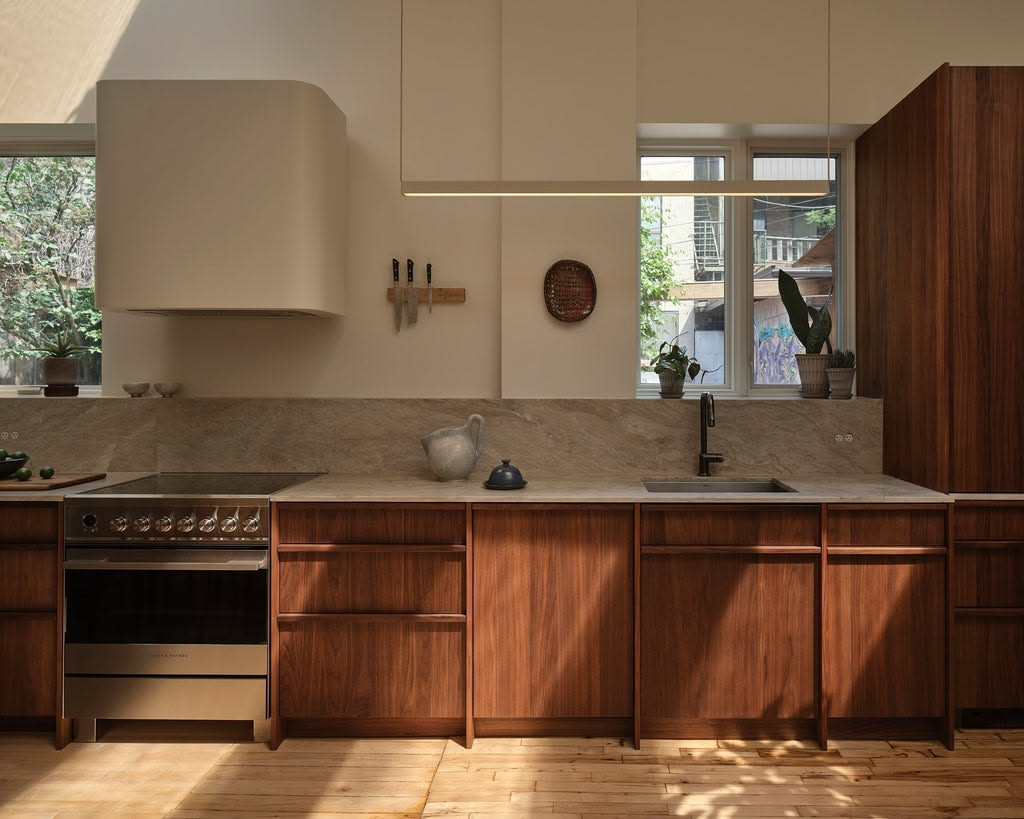
What costs extra?
Confirm what the base price includes: cabinet dimensions, installation, door clearances and appliance fit. Then ask for an itemised price difference for each upgrade.
For example, when replacing a shelf cabinet with deep drawers, check the added drawer and runner costs and whether the replaced doors, hinges and shelf have been deducted. Compare both options using the same drawing, finish and installation scope.
Upgrade the cabinets you use every day
Start with daily frustrations: moving stacked pots, reaching behind dishes or bending into deep cabinets. Improve these frequently used cabinets before adding fittings to an occasional-use corner.
Prioritise changes that are difficult to make later, such as drawer sizes and cabinet construction. Removable dividers, mats and baskets can wait until you know what fits.
Dish storage: drawers before dividers
If you take dishes from the back of a base cabinet every day, replacing fixed shelves with suitable drawers is worth considering. Plan separate places for cutlery and small utensils, then size the remaining storage around the bowls and plates you actually own.
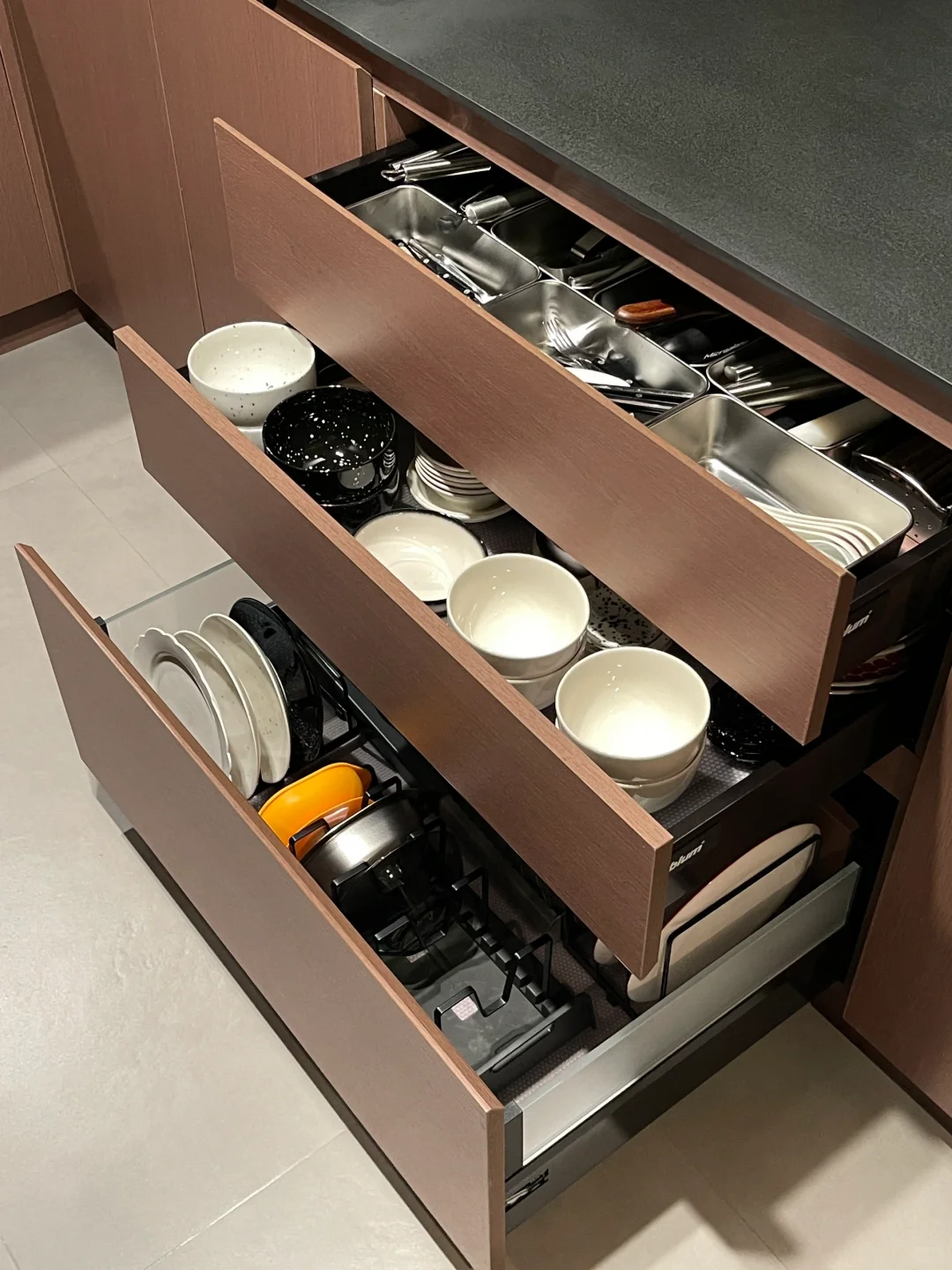
There are two separate decisions here: building a well-sized drawer that opens comfortably, and adding a dedicated dish rack inside it. With a limited budget, get the drawer right first. Choose the internal fittings after checking how your dishes fit.
A rack with fixed slots may suit a matching dinner set but leave less flexibility for deep bowls, oversized plates and unusually shaped serving dishes. A drawer with adjustable or removable dividers may be a better fit for a varied collection. Take representative dishes to a sample cabinet and try placing and removing them.
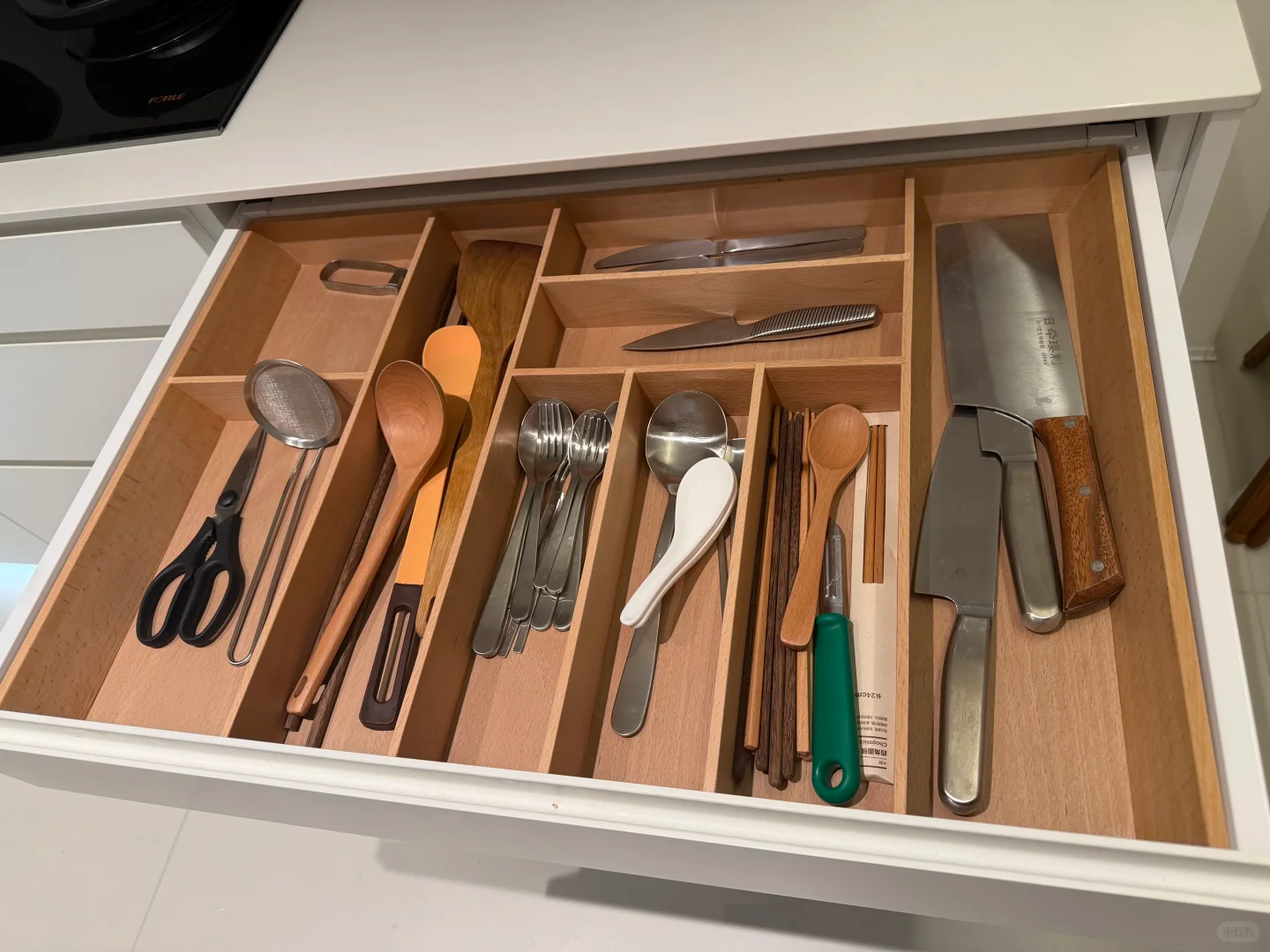
Check the usable height as well as the drawer-front height. Rails, handle channels and an internal drawer above can reduce the available clearance. Confirm that the largest everyday plate fits and that the drawer still closes normally.
If your dishes are few and already easy to reach, or a comfortably positioned wall cabinet handles them well, this upgrade can wait. Spend the money on the cabinet that creates more difficulty.
Pot storage: when are deep drawers worth it?
Deep drawers are worth comparing with shelves when you repeatedly lift several pans to reach the one underneath. A drawer can bring the contents forward and make it easier to give frequently used cookware its own place.
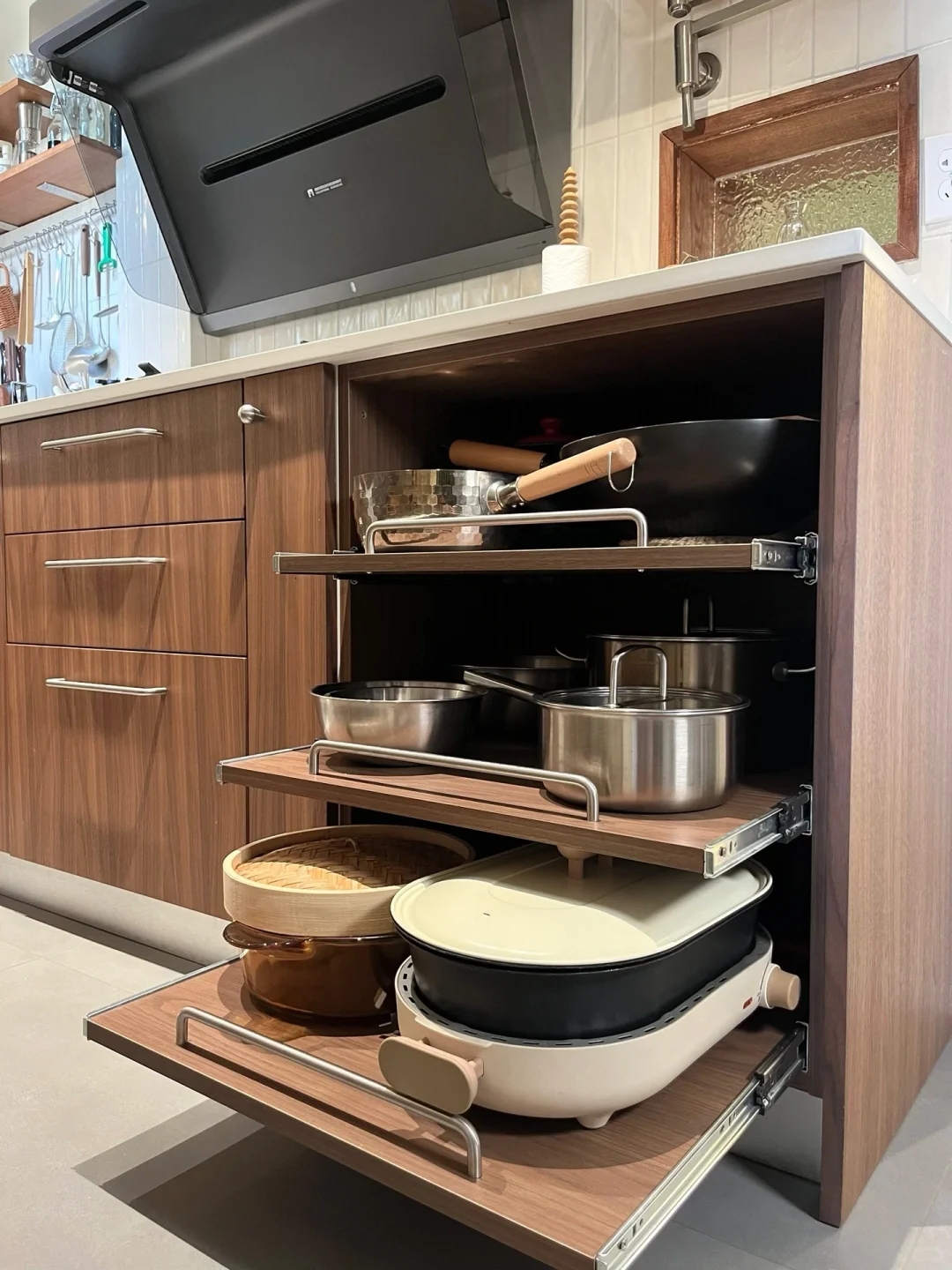
Start with your largest pot, including its handles and lid. Use those dimensions to check the drawer’s clear width, depth and height. Dividing the cabinet into more drawers does not help if the stockpot you use every week no longer fits.
Ask the cabinet supplier to identify the runner model and its installation and load requirements. Describe the cookware you expect to store. When viewing a sample, test the opening effort and extension with a representative load where possible. An empty showroom drawer does not tell you how the planned assembly will feel in use.
If you own only a few pans and use them occasionally, a shelf with sensible spacing may be enough. The extra cost should solve a regular problem, rather than simply make the specification more elaborate.
Under the sink: leave room for access
A sink cabinet may look spacious on a plan, but the bowl, waste pipe, valves and water-treatment equipment can divide it into small usable areas. Have the cabinet supplier and equipment installer coordinate those positions before choosing storage fittings.
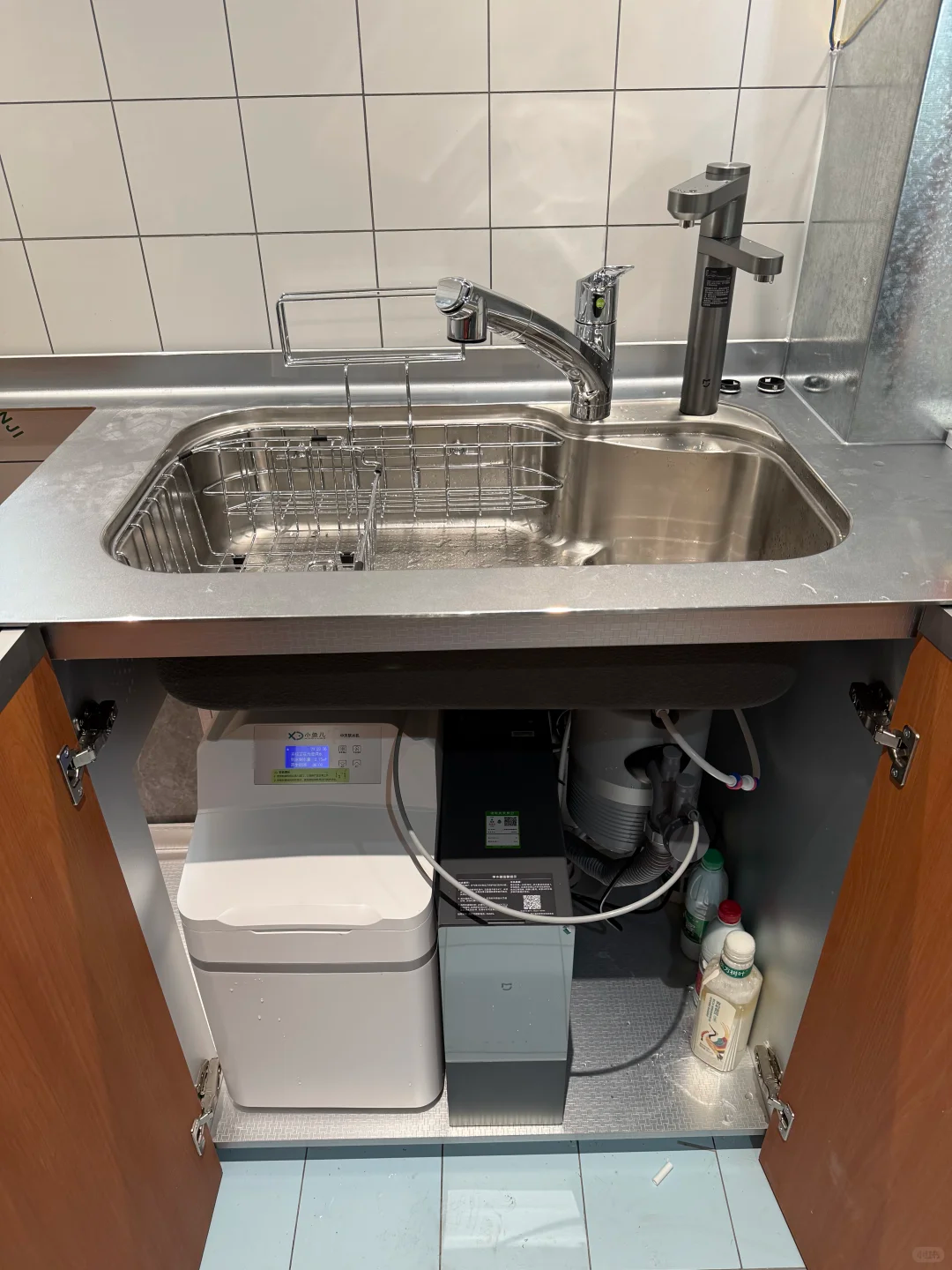
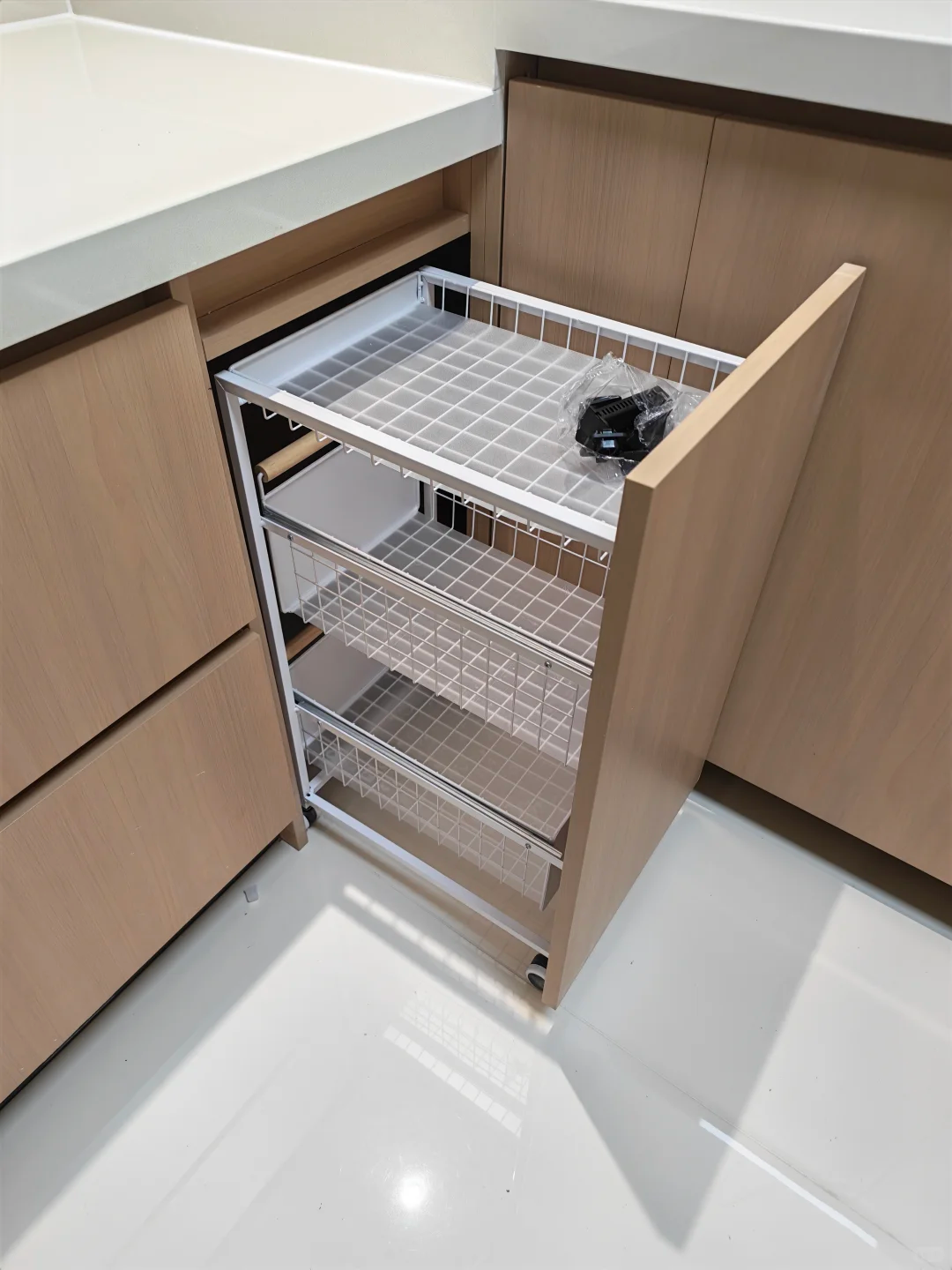
A straightforward starting point is a hinged-door cabinet with removable baskets or trays. Group cleaning supplies so they can be lifted out together, and keep valves, connections and serviceable parts accessible. Confirm the cabinet-base protection and treatment of cut edges in the specification. A tray can help with cleaning and spotting drips; a leak still needs to be repaired.
Where pipes run through the centre, separate storage on each side may use the available space more effectively. Where equipment fills most of the cabinet, a lift-out basket can be easier to move for maintenance than a fixed arrangement of shelves and pull-outs.
A U-shaped drawer or a pull-out designed around the pipework is an optional upgrade. Compare the useful storage it adds, the items it will hold and how it can be removed for servicing. A more complicated fitting is difficult to justify if little usable space remains after the equipment is installed.
Corner cabinets: do you need a pull-out?
Decide what will live in the corner before choosing a mechanism. If you need to retrieve everyday cookware from a difficult blind corner, ask for a demonstration of a suitable pull-out. If the cabinet mainly holds occasional baking tins or spare serving pieces, ordinary shelving may fit the budget better.
Check the whole opening sequence. The cabinet door, moving baskets and neighbouring drawers need to work together. Put items close to your own in size into the sample and take them out again. Judge the extra cost against that improvement in access.
Do not assume an empty corner cabinet will accept any pull-out later. If you want that option, confirm a compatible model’s door opening, internal clearances, handedness and fixing requirements now. Otherwise, adding the fitting later may require changes to the cabinet.
If you can upgrade only one or two cabinets
Consider an illustrative L-shaped kitchen used for cooking dinner most days. It stores a frying pan, a stockpot and everyday dishes. The sink cabinet contains water-treatment equipment, while the corner holds occasional baking supplies. This example shows a way to choose priorities, rather than a priced project.
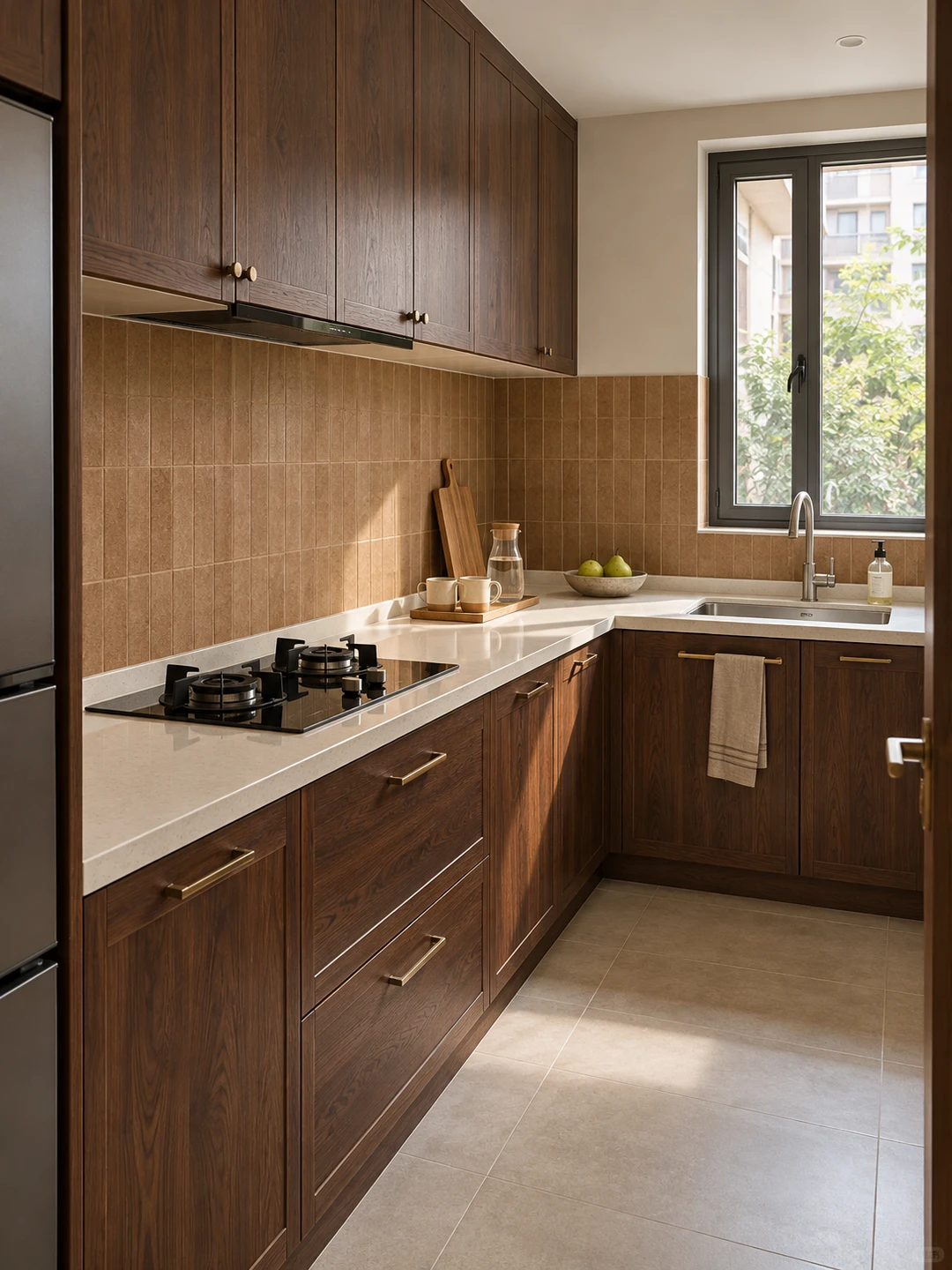
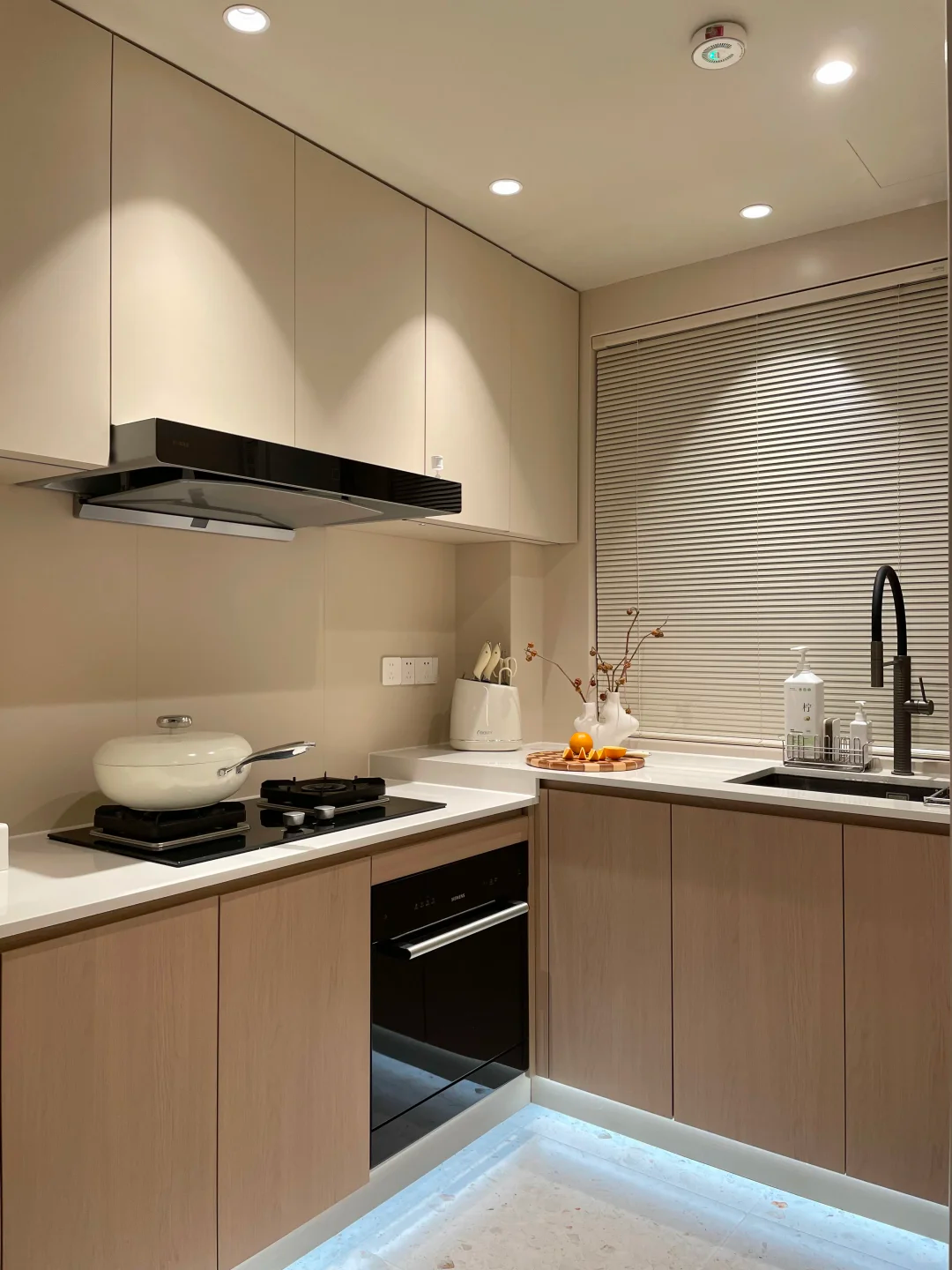
If the budget covers one upgrade, compare the dish cabinet with the pot cabinet. Choose deep pot drawers first if moving stacked cookware is the bigger daily problem. Choose better dish storage first if putting away plates and finding small utensils takes more effort. Keep the other cabinets at a workable base specification.
If the budget covers two upgrades, price the dish and pot cabinets together. Start with removable storage under the sink and leave low-use items in the corner. Dedicated dish racks or a corner mechanism can be considered if money remains.
The order changes with the household. An occasional cook may be comfortable with more shelves. For someone who finds bending difficult, first move frequently used items into an accessible position, then choose fittings that support that arrangement.
What to build now and add later
Separate the decisions that affect cabinet manufacture from accessories you can choose after moving in. Ask for an itemised comparison before releasing the drawings.
| When | What to consider | What to confirm |
|---|---|---|
| Decide before manufacture | Everyday dish and pot storage; drawer arrangement; sink equipment and service access | Clear internal dimensions, opening clearances, hardware models, price difference and installation scope |
| Add if the budget allows | Dedicated dish racks, corner mechanisms or pipe-compatible pull-outs | The specific problem solved, practical trial fitting and access for cleaning or removal |
| Choose later once fit is confirmed | Loose dividers, non-slip mats, removable baskets and trays | Actual fit after installation, cleaning method and clear access to equipment |
“Add later” mainly applies to removable accessories with confirmed space. Changing drawer fronts or adding fixed hardware after installation may involve cabinet alterations.
To prepare your brief, bring the kitchen plan, dimensions of your everyday cookware and dishes, appliance models and a short list of the tasks you want to improve. Ask for a base option and an upgrade option for each priority cabinet. Once you can see what is added, what is replaced and the resulting difference in price, it becomes much easier to decide where the budget should go.