Issue one baseline package
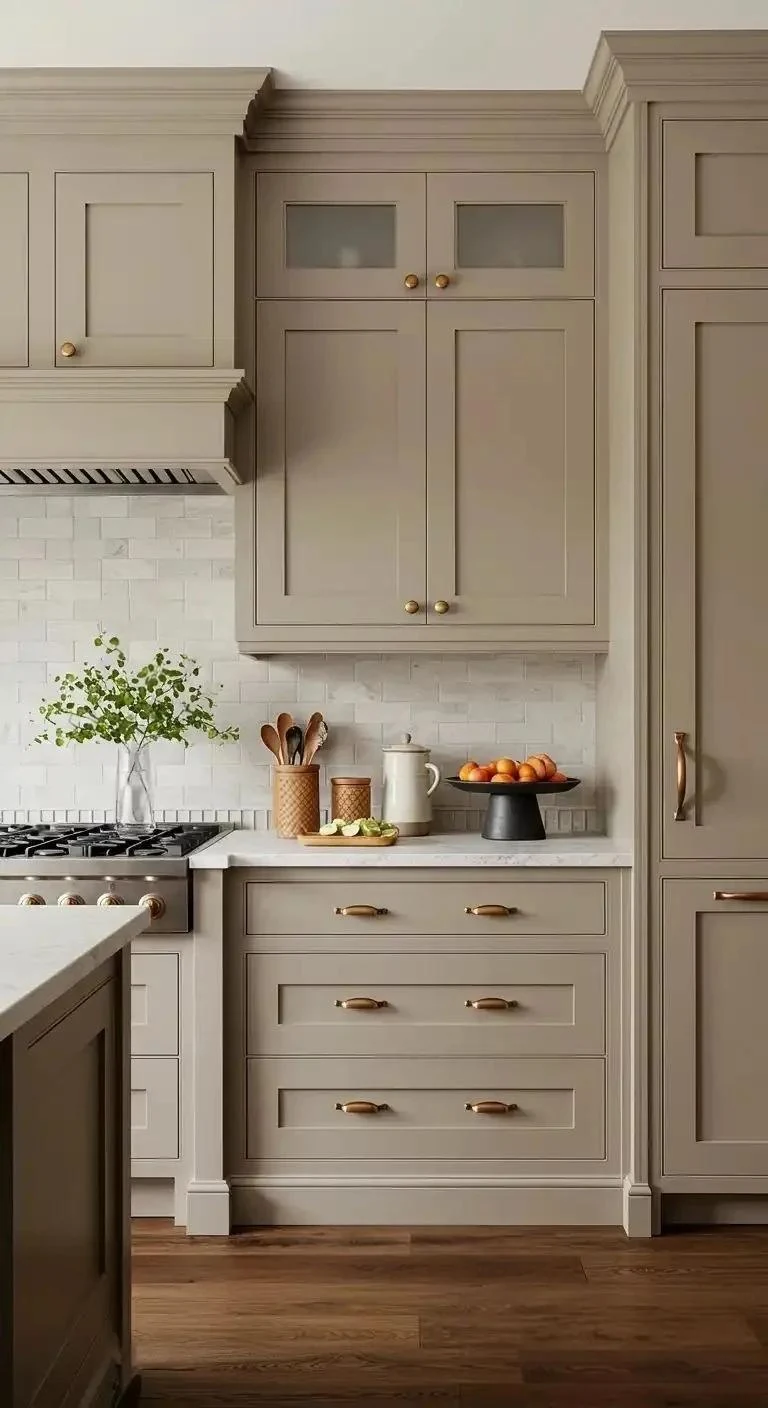
Send every supplier the same plans, room list, appliance references and specification direction. Give the package a date and revision. Keep a copy of what was issued, and ask each supplier to identify the information used in its quotation. This simple step prevents a later drawing from being compared with a price prepared for an earlier layout.
Say what stage the project has reached. A budget inquiry from preliminary drawings has a different purpose from a production-ready order. Mark unverified measurements, provisional material selections and undecided appliances. Ask the supplier to state which assumptions it has made and which items need confirmation before its price can be treated as a firm offer.
Use the same currency and the same comparison basis, and record the quotation's date and validity. If a proposal relies on an exchange assumption, provisional freight or another variable item, keep that condition visible. The aim is not to force every commercial arrangement into one format, but to identify the differences before deciding what a total means.
Reconcile the cabinet count
Follow each room from the plan to the quotation. Check base units, wall units, tall cabinets, islands, wardrobes and vanities against the schedule. Keep the cabinet reference and quantity beside the drawing. A repeated unit type can be grouped for pricing, but the grouping still needs to reconcile with the room layout and the intended locations.
Then count the surrounding components. Fillers, end panels, toe kicks, light rails, cornices, appliance panels, scribes and other finishing pieces can determine whether the package is complete. Ask whether they are included in the cabinet line, separately priced or excluded. Avoid using an apparently tidy cabinet count as evidence that every visible part of the room has been covered.
For a contractor buying repeated room types, show the number of repetitions and identify mirrored or modified versions. Clarify whether the quoted quantity includes sample rooms, spares or later phases. A room-type price needs a defined multiplier; a project total needs a defined room list. Keep both visible when reviewing an amended proposal.
Compare what is inside the cabinet
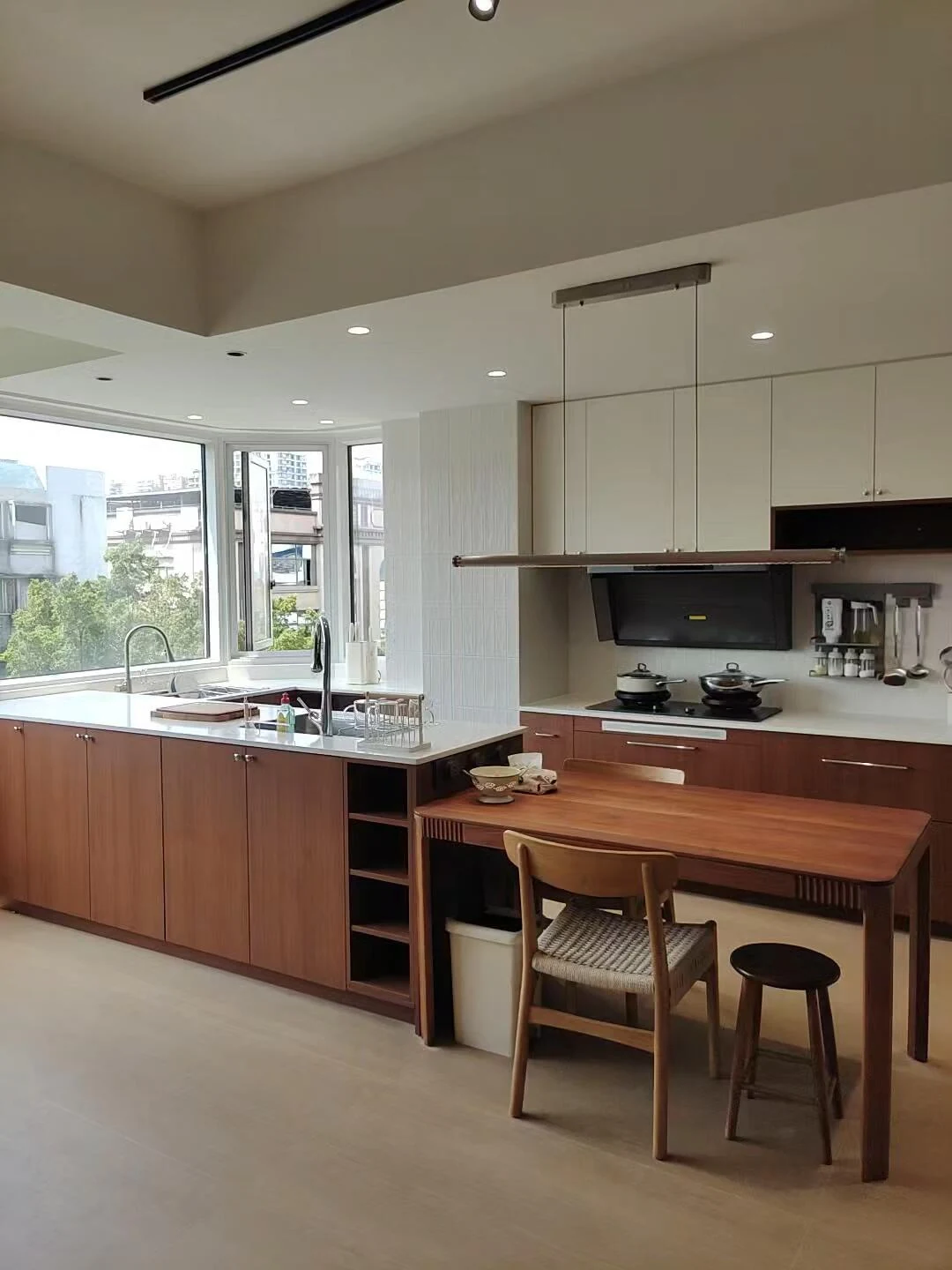
Read the carcass, back, shelf, front, panel and edge descriptions separately. Two proposals may use the same broad material label while assigning it to different components. Ask each supplier to identify what its description covers. Use a short exceptions column for components that differ from the issued specification rather than accepting a single general note.
Compare visible and concealed components with the same care. An upgraded front does not identify the drawer bottom or back construction. A decorative side panel can have a different finish from the door beside it. The spec-sheet article explains how to organize these details by component and location without relying on an all-purpose quality label.
Assess a proposed alternative against the reason for the original choice. Is it intended to change appearance, reduce the number of material families, simplify construction or adjust the price? Ask for the affected components and the revised sample or evidence where relevant. This turns value engineering into a specific decision that can be carried into the drawings.
Separate fittings from storage accessories
Record the hinge and slide schedule, the opening method and the intended application. Where a brand and series have been agreed, compare those references rather than the presence of a brand name somewhere in the proposal. Check the quantities of specialist fittings and any accessories needed for the selected system. A general soft-close note leaves many choices unresolved.
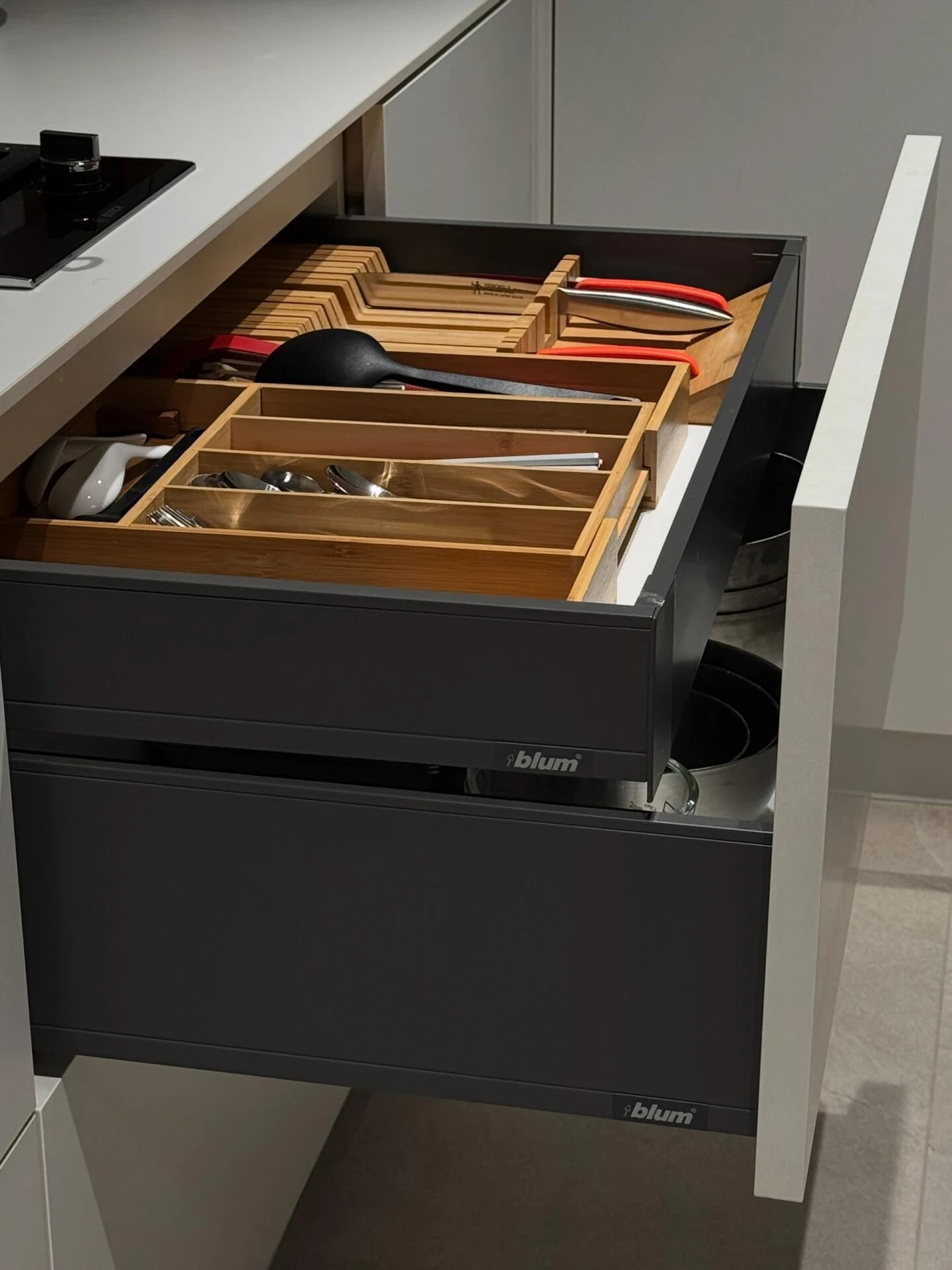
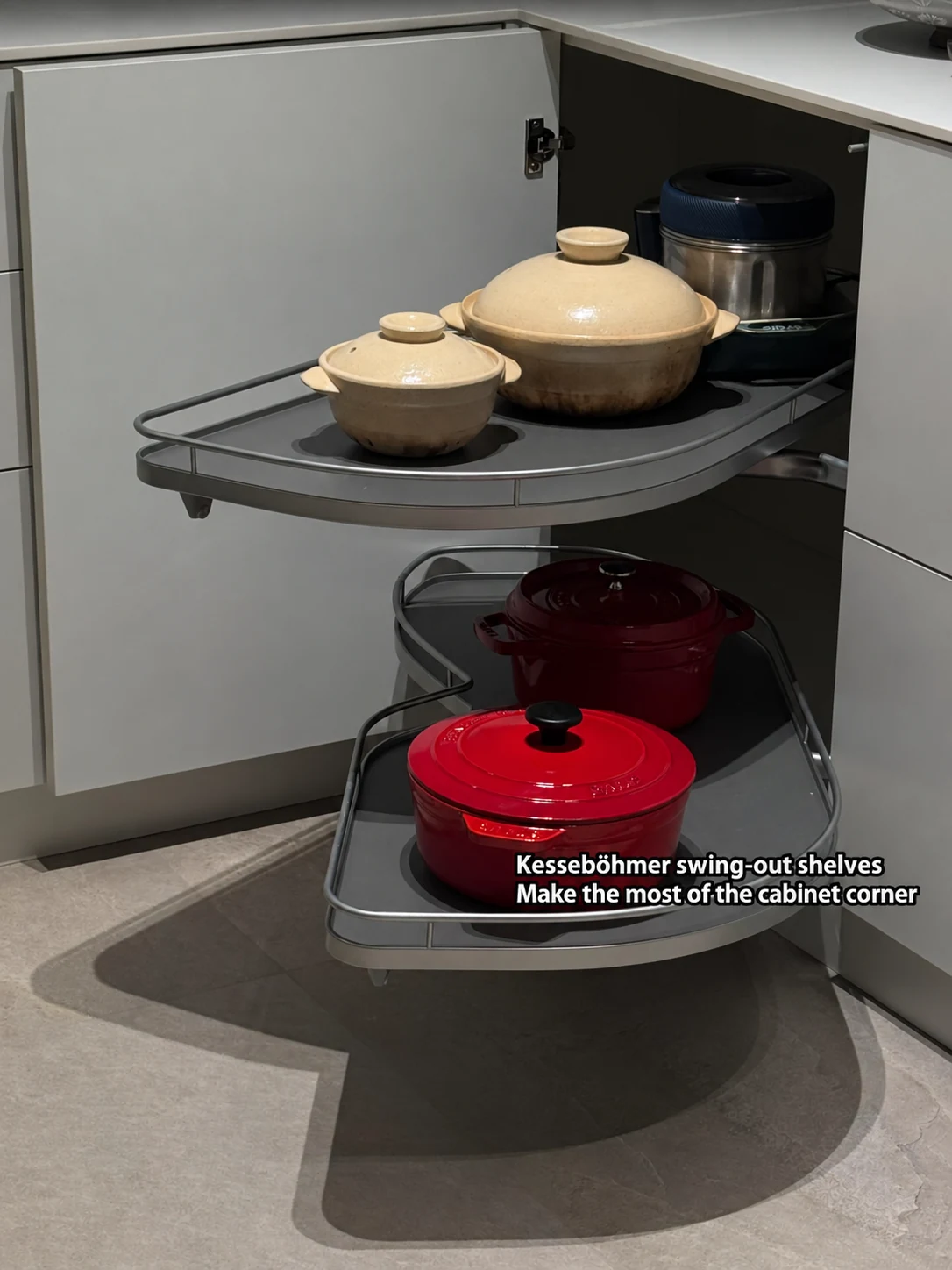
List internal storage separately: cutlery trays, waste bins, pantry fittings, corner mechanisms, wardrobe racks, baskets and lighting equipment. Mark included, optional, excluded or still to be confirmed. If a rendered room shows an accessory, ask whether that image forms part of the priced scope. A visual reference is not a reliable bill of quantities.
Review the operating space as well as the component list. A cheaper substitute may change the internal arrangement or opening envelope. Keep the decision tied to the cabinet reference and the drawing. The hardware comparison and detail library can help explain the questions to resolve, without establishing that any pictured fitting is included in a quotation.
Align finishes and sample approval
Match the proposed front construction, surface product or coating system, sheen and edge. Include the reverse and exposed panels where these affect the result. A color description alone cannot establish that two quotations offer the same finish. Ask which sample represents the offered specification and whether a different construction is used for shaped fronts or large panels.
Keep sample and drawing costs visible. Some proposals may treat design development, physical samples or delivery of samples as separate stages. Ask when a charge applies and how it relates to the eventual order. Do not assume that a service offered in a conversation has been included in the final price unless the quotation records it.
If a proposal changes after sample review, request a clearly dated revision and a list of changes. Carry the selected sample reference into the order schedule. The finish-system article explains the distinction between a color direction and an accepted manufacturing specification. A traceable reference makes a later inspection more useful.
Build a delivered-scope comparison
Separate the goods from packing, transport and work at the destination. Identify origin handling, international freight, insurance, clearance, current duties and taxes, destination delivery, unloading, storage and installation. State who arranges and pays for each line. An overseas cabinet price and an installed local price cannot be compared fairly until their boundaries are visible.
Confirm the exact delivery place and the agreed handover responsibilities. A port, a warehouse and a room inside a house are different destinations. Ask about access restrictions, lifting, stairs and temporary storage with the relevant local service provider. Keep items outside the cabinet supplier's scope in the comparison rather than removing them from the project budget.
Do not insert a fixed duty rate from a general article. Have a customs broker check the current treatment for the actual order. Freight and destination services should also be based on the proposed shipment and location. The factory-direct buying guide explains how these responsibilities fit into the inquiry and approval process.
Put unresolved items in a visible register
Use one status for every comparison cell: included, excluded, allowance, optional or to confirm. Give an allowance a description and a basis; otherwise it is simply another unknown. Record the responsible person and the event that resolves it. An open question should remain visible until the proposal and the project documents have been updated together.
| Comparison line | Supplier A | Supplier B | Decision needed |
|---|---|---|---|
| Cabinet count and drawing issue | Record the quoted basis | Record the quoted basis | Reconcile the same room list |
| Component and finish schedule | Included or exception | Included or exception | Resolve specific differences |
| Hardware and organizers | Named scope | Named scope | Compare series and quantities |
| Delivery and local work | Included or excluded | Included or excluded | Assign the missing responsibilities |
| Open allowances | State the basis | State the basis | Confirm owner and next action |
Resist converting an unresolved line into a zero cost. A countertop, end panel or unloading task still exists even if one proposal has not priced it. Keep those items beside the total so that the decision reflects the expected delivered scope. Ask for an updated offer when the missing information has been resolved.
Review the commercial terms and change process
Read the payment stages, approval milestones, variation process, inspection arrangements and warranty wording with the proposed scope. Confirm the contracting party and the records needed to accept a stage. These terms should be specific to the order; a general website article cannot establish a payment percentage, warranty duration or promised production date for your project.
Discuss what happens when the brief changes. A late appliance revision, different finish or additional room can affect the price and schedule. Ask for a written change that identifies the affected components and replaces the relevant drawing or schedule issue. Keep the earlier comparison as a record, while ensuring the current approved package is easy to identify.
Before accepting a proposal, follow a few cabinets through every document and resolve the outstanding decisions. Use the quote preparation template to organize the comparison. A clear total then becomes the result of a shared scope, with the major assumptions and responsibilities visible to everyone involved.
Questions before you approve
What should I align before comparing totals?
The same drawing issue, cabinet quantities, component schedule, finishes, fittings, accessories and delivery or installation boundaries.
How should I record an item missing from one quote?
Mark it as excluded, an allowance or TO CONFIRM, as appropriate. Identify who will resolve or price it; do not silently treat it as zero cost.
Can I compare a delivered order with an installed local price?
Make their responsibilities comparable first. Add the relevant delivery, unloading, storage and local installation scope to the comparison.
Where can I start a comparison schedule?
Use the blank and illustrative CSV downloads on the cabinet quote template page, then adapt the fields to the actual project and approved drawing package.