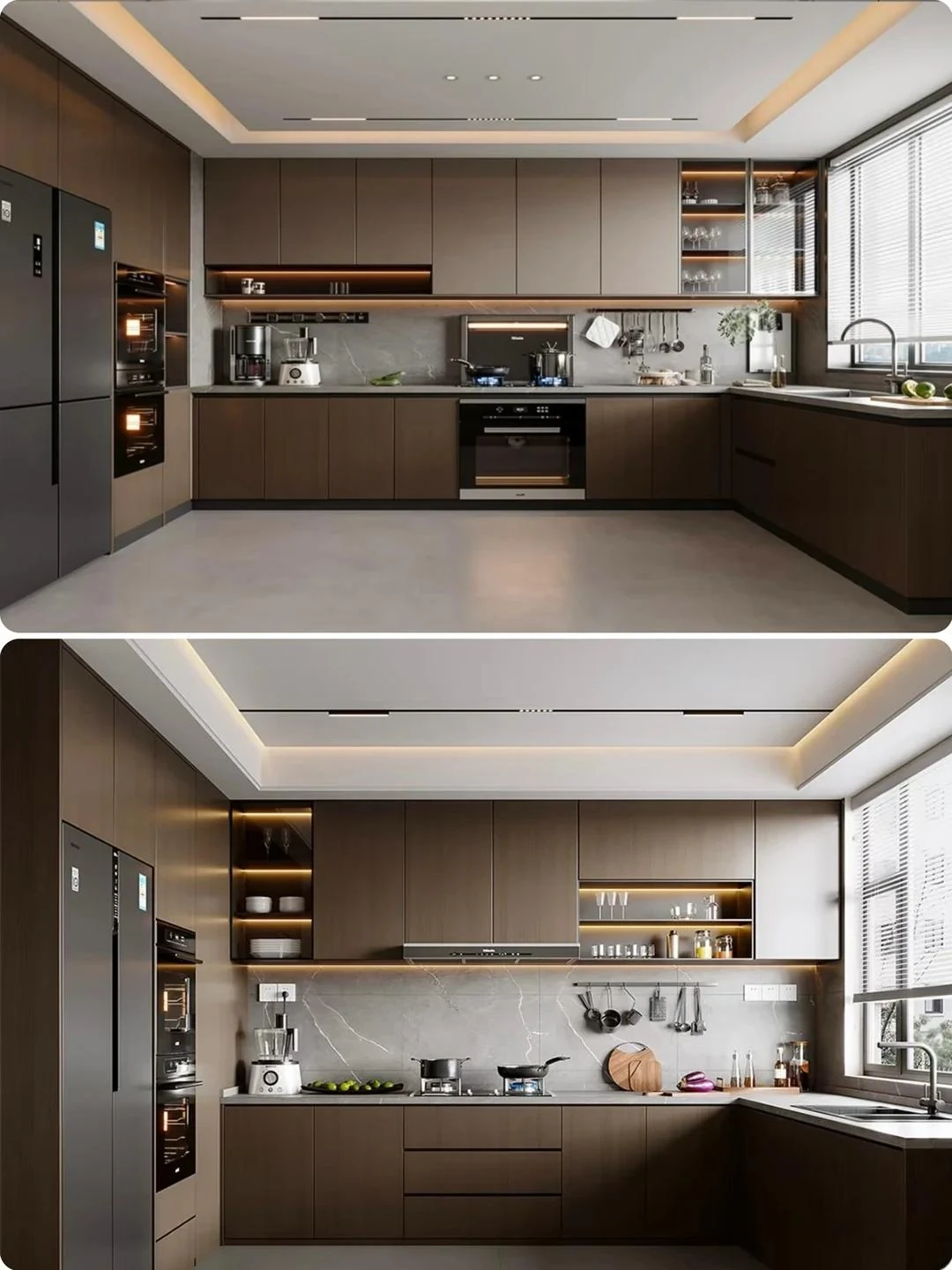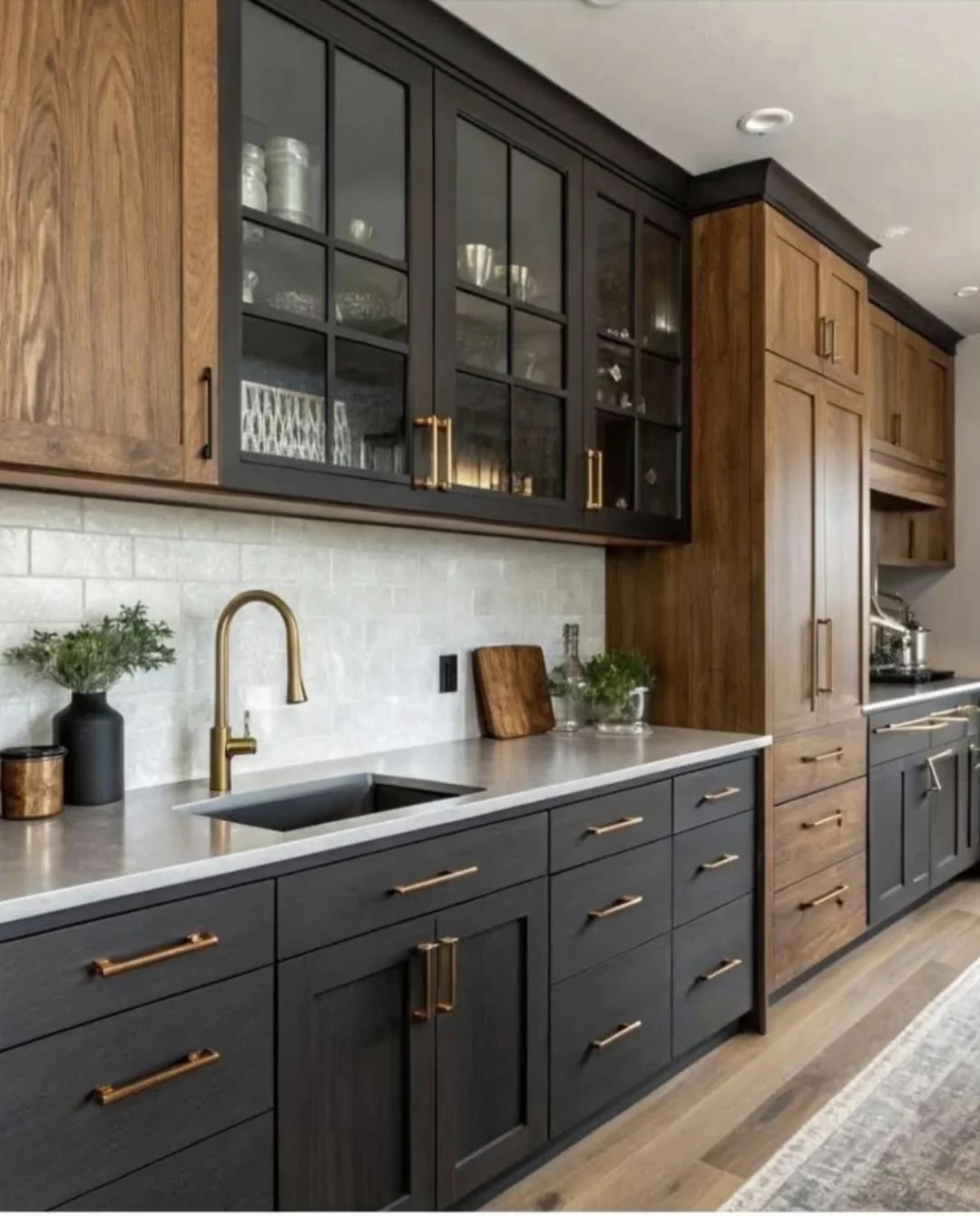
Separate door construction from surface treatment
Start by describing the door shape. A slab, a framed front and a profiled one-piece front ask different questions of the material and finishing process. Then identify the substrate and the visible treatment. Painted describes an appearance and application route; it does not identify every product in the coating system or every component beneath it.
Keep surface families distinct in the inquiry. A decorative panel with a bonded surface is different from a veneer with a clear coating. A formed foil front is different from a sprayed opaque finish. A photograph can help communicate the visual direction, but a material name and a physical edge sample are more useful when comparing what two suppliers have actually offered.
Ask for the same construction in the sample as in the proposed order. A flat color chip cannot show an internal frame corner, a shaped grip or a joint between materials. Request a representative door or detail sample when these features are central to the design. The door-finish guide connects the surface decision to the wider room brief.

Ask what the word lacquer means in this proposal
Lacquer is often used as a convenient label, but it is not a complete specification. Ask for the coating manufacturer, product or system, substrate preparation, application route and relevant technical information. Confirm whether the description applies to the face only, the edges and reverse side, or every exposed component in the room.
The American Hardwood Information Center distinguishes several lacquer, varnish and other finishing systems. Its overview shows why repairability, resistance and appearance should be discussed separately, and cautions that formulations and manufacturing facilities influence performance. Use that distinction to ask better questions rather than treating a generic system name as a guaranteed result. Read the association's finishing-system overview.
For an overseas order, ask who will support a repair or replacement after delivery. A finish can look excellent in the original sample yet require a particular product, process or specialist for later work. The replacement-front route, color reference and stored order information belong in the discussion before the order is placed, alongside the initial appearance.
Treat UV as a curing description
A UV-cured finish should be described through the actual product and manufacturing process. The term alone does not settle the color, substrate, gloss, edge treatment or repair method. Ask for the applicable technical information and a finished sample. Avoid interpreting a production-process label as a universal ranking above every other finish family.
The same principle applies to claims about easy repair or scratch resistance. Ask what damage is covered by the statement, how the surface is tested and what the recommended repair involves. Routine marks, a deep impact, a damaged edge and a color mismatch are different problems. A general promotional description cannot explain all of them.
When comparing options, keep the room's real conditions visible. Consider where hands repeatedly touch the front, where cleaning is frequent, where appliances create special interface requirements and where daylight changes the view. Ask the supplier to relate the proposed finish to those locations, rather than selecting a process only because its name sounds more advanced.
Compare painted, laminated, formed and veneered fronts
Compare complete front assemblies. For a painted option, identify the substrate, preparation and coating system. For a laminated or faced panel, identify the surface product, substrate, reverse side and edge. For a formed front, ask how the front and reverse are constructed and where the manufacturer's application guidance places limits on use.
For veneer, agree the species or selection reference, grain direction, matching approach and finish. Natural variation is part of the visual conversation, but it should still be supported by an agreed sample range or other acceptance reference. Ask how the end panels, fillers and adjacent components will relate to the door fronts rather than approving each piece in isolation.
| Front family | Information worth requesting |
|---|---|
| Opaque sprayed finish | Substrate, preparation, coating system, color, sheen and edge sample |
| Clear-finished veneer | Veneer reference, substrate, grain direction, matching and coating |
| Decorative faced panel | Surface product, core, reverse face and edge specification |
| Formed foil front | Front construction, reverse, edge transition and application guidance |
| Gloss or textured slab | Product reference, surface texture, edge detail and maintenance instructions |
Manufacturer-specific documents are useful here. For example, REHAU presents its surface, panel and edgeband options as coordinated product systems. The practical lesson is to identify the actual combination being offered; it does not mean that an unnamed panel on a quotation is a REHAU product. See REHAU's surface-system information.
Review sheen in the room's lighting
Color approval and sheen approval should happen together. Place the proposed sample near the countertop, flooring and wall finish. View it under daylight and the planned artificial lighting. Consider the direction of light across a tall run and the transition between a door and a visible end panel. A small screen swatch cannot reproduce all of those relationships.
Decide whether the aim is a quiet field of fronts, a more reflective surface or a visibly textured material. Then ask how that direction affects sample selection and maintenance. A material can be right for the design without being right for every component; a contrasting island or a timber section may use a deliberately different assembly.
Include the opening method in the sample review. A recessed edge, a channel or a projecting handle changes where people touch the door. The front edge may be more visible and more frequently handled than the center of the panel. Make its shape and finish part of the approval rather than accepting a face color and resolving the grip later.


Look at the edges, back and adjoining panels
Turn the sample over. Inspect the reverse finish and the transition at each edge. Check the inside corners of a framed or profiled front, and ask how the construction shown in the sample carries through to fillers, exposed ends and appliance panels. These are normal parts of the room's appearance, not incidental details outside the finish selection.
Near sinks, appliances and service cut-outs, ask how the complete interface is resolved. Use the appliance manufacturer's instructions and the relevant product information to coordinate the installation. Do not assume that a finish description makes an assembly waterproof or suitable beside any source of heat. The surrounding countertop, plumbing and installation also influence the result.
Keep any proposed variation in writing. If a shaped front uses a different process from a flat end panel, identify both and agree how they should look together. If a large panel needs a particular joint or support, show it in the drawing. A good finish schedule makes these differences visible while there is still time to decide.
Make the approval sample traceable
Give the accepted sample an identification, date and relation to the drawing issue. State the product or system, color reference, sheen, substrate and edge detail it represents. Keep a corresponding record with the supplier. A description such as the beige sample from the first meeting becomes difficult to use when several similar options have been discussed.
Agree what the sample does and does not establish. It may define the selected surface and edge without proving the color of every photograph or the exact grain of every timber component. Define the viewing conditions and the way variation will be assessed. Record outstanding decisions before production release, especially where adjoining materials are supplied by different parties.
For inspection, compare the order against that approved package. Record the affected component when a difference is found, use photographs to explain its location and agree the next action. Avoid changing the reference informally during the review. An inspection can only resolve a mismatch efficiently when the accepted finish and drawing revision remain clear.
Plan care and replacement with the finish
Ask for care guidance for the selected product, including suitable cleaning methods and any restrictions. Do not assume that advice for one coating applies to every front described as painted or matte. Keep the care information with the order records and pass it to the person who will maintain the cabinetry after installation.
Discuss the process for a replacement front, a damaged edge or a local repair. Confirm what information will be needed, who assesses the issue and how the written warranty applies. Coverage and commercial terms are project-specific; they should come from the order documentation rather than a general finish article.
Use the cabinet schedule template to record the selected finish next to each component. The result should be a small set of clear references: a construction description, a named surface or coating system, an accepted sample and an agreed care route. That gives the intended appearance a practical basis for pricing, production and handover.
Questions before you approve
Is lacquer a complete finish specification?
No. Identify the actual product or coating system, substrate, application, color, sheen, edge and sample reference.
Does UV mean the same product in every quotation?
No. Ask for the specific finish, substrate, process and technical information. The curing description alone does not settle the complete front assembly.
How should I approve a color?
Review a representative physical sample with the proposed adjoining materials and room lighting, and record the accepted color, sheen, construction and sample identity.
Are all painted fronts maintained the same way?
Use the care guidance for the selected product. Confirm the repair or replacement process and the written warranty terms for the order.