
Separate sheen from material
Two matte fronts may use different substrates, surface layers and edge constructions. The same is true of two glossy fronts. A sheen label cannot establish durability, emissions documentation, repairability or suitability for a particular location. Ask what the complete front is, then discuss its appearance.
Keep the product or coating reference, substrate, face, reverse and edge in the finish schedule. If a sample changes between quotation and production, identify the substitution and review it. The cabinet finish systems guide explains why a color and the word “matte” leave important parts of the order unresolved.

Review reflections in the actual room
Consider the direction of windows, pendant lights and under-cabinet lighting. A glossy front may reflect those features clearly; a lower-sheen surface can produce a different visual effect. Neither characteristic is automatically right for a small or large room. The surrounding colors and the location of the front matter.
Stand a sample vertically where the cabinet will sit and view it from normal approach angles. Compare a tall front as well as a small door when the proposal includes large panels. A hand-sized sample viewed flat on a desk does not reveal the whole composition or how a reflected window crosses several aligned fronts.
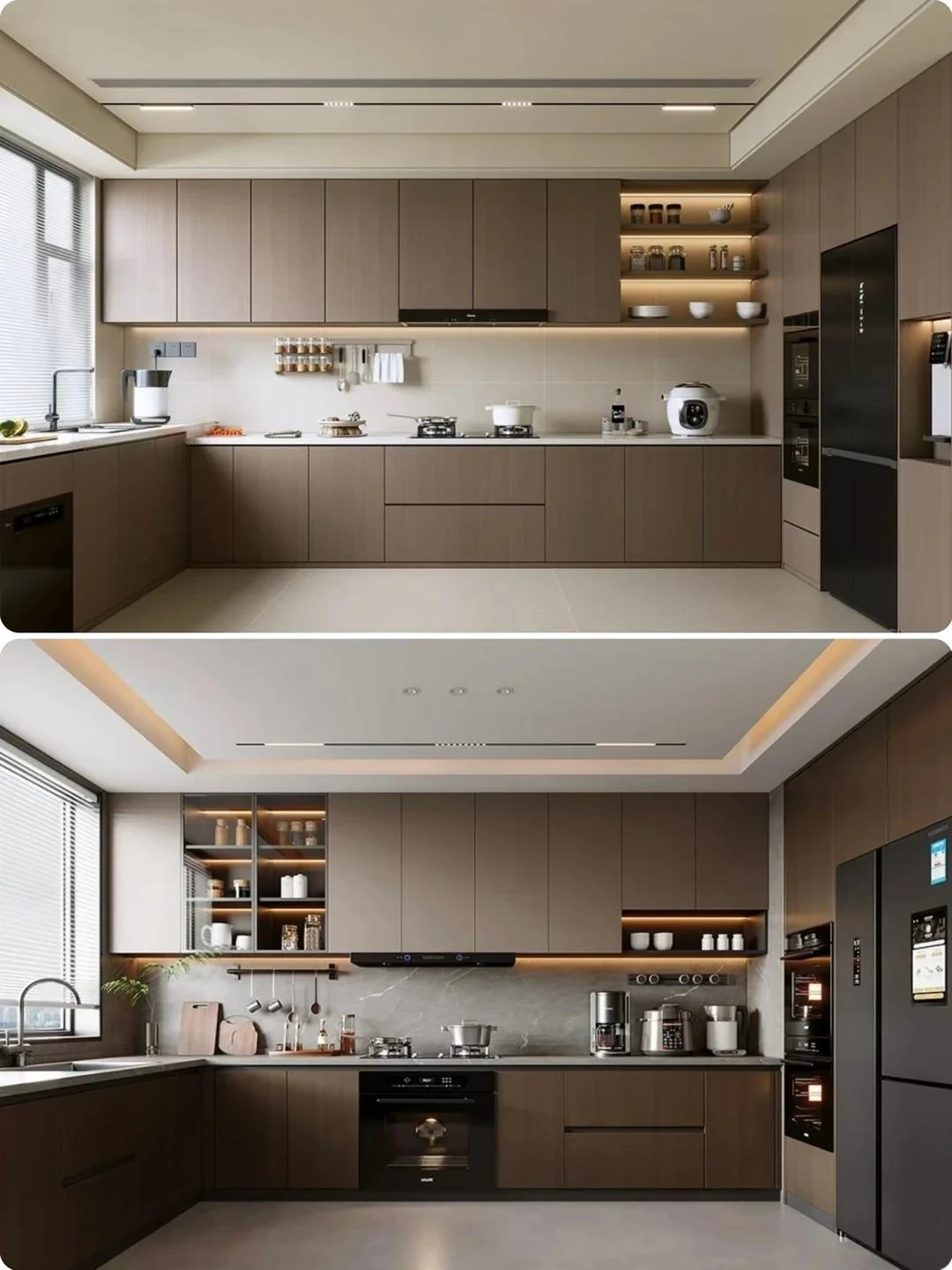
Test touch and cleaning on the selected product
Ask for the manufacturer's care guidance and discuss the expected use around handles, finger pulls and opening edges. Fingerprint visibility depends on the particular color, texture, product and lighting; it should not be promised from the word “matte” or “gloss.” Review a sample after ordinary handling.
Clean the trial sample only as directed for that product. Assess whether the routine is realistic for the household and whether an unusual stain or damage needs specialist advice. A showroom demonstration is useful evidence of that sample's behavior, but it should not become a blanket claim about every finish with the same sheen.

Compare the edge and opening detail
A polished-looking face can still meet an edge that changes the appearance at a close viewing distance. Review corners, the reverse and the joint between the surface and edge treatment. For a profiled or framed door, ask how the finish continues across the shape and where any construction joints remain visible.
Check a representative handle, recessed pull or finger-access detail with the front. Frequent contact occurs at these points, and the chosen opening method can expose edges or create different cleaning needs. Coordinate the actual front thickness and construction with the fitting system rather than choosing them independently.

Build a balanced material palette
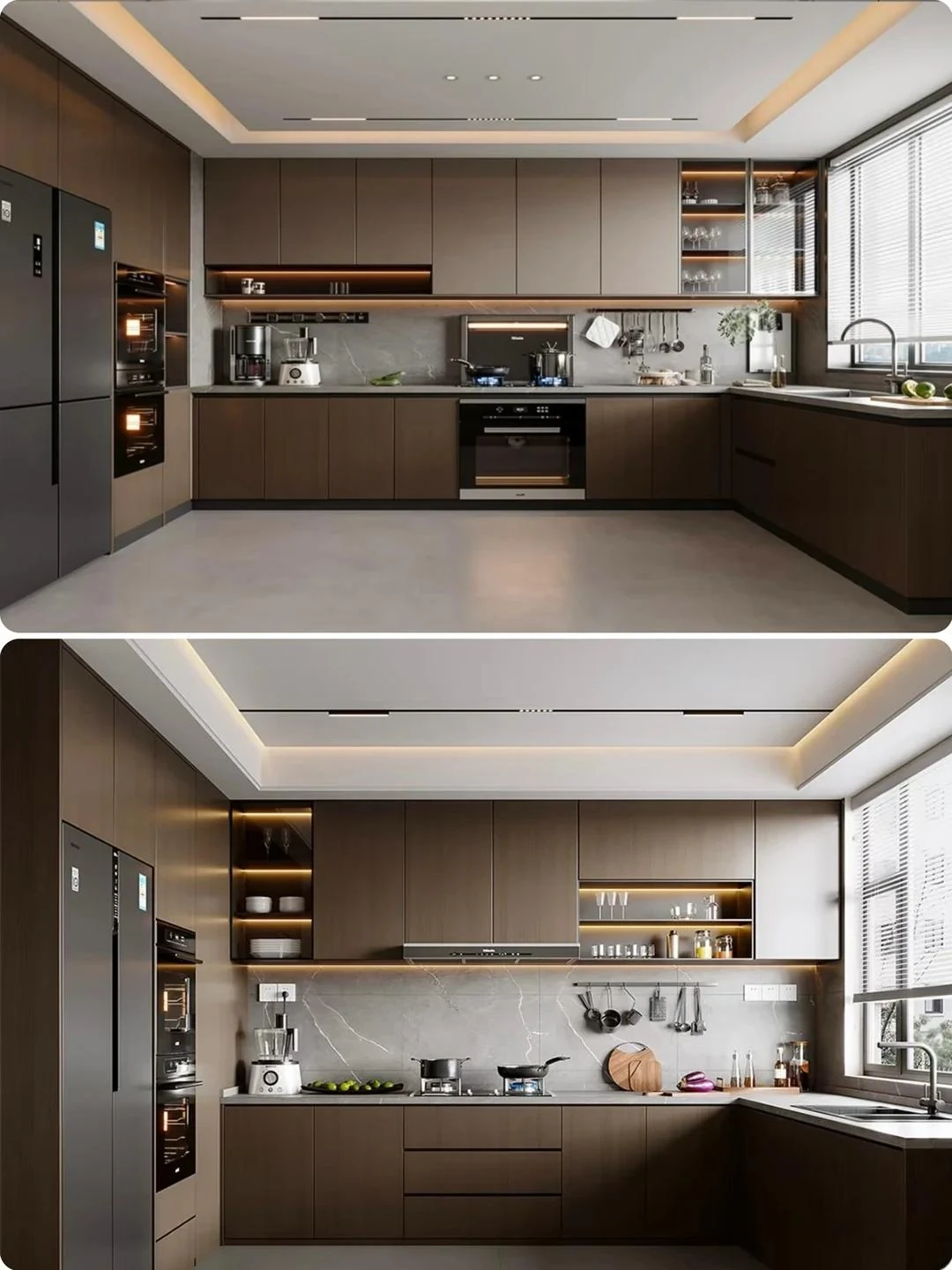
Place the cabinet sample beside the proposed countertop, floor, wall finish and metal details. Compare undertones and reflectivity. A room can combine different sheens deliberately, but the boundaries deserve attention: tall units, island ends and a transition to living-room storage can make the differences especially visible.
Keep the palette small enough to judge as an assembly. Photograph it as a record, but approve physical samples where color and surface appearance matter. Screens and edited reference photographs cannot establish an exact match. Record the accepted sample identity and the adjoining materials used during the review.
Make approval specific and repeatable
Write the selected finish as a complete entry and retain the accepted sample. Include any agreed expectations for grain, texture or visible variation. Where different products are used on doors and exposed panels, identify both and review their junction rather than assuming identical color names produce identical results.
| Approve | Keep in the record |
|---|---|
| Product | Surface or coating reference and substrate |
| Appearance | Color, sheen, texture and accepted sample |
| Construction | Face, reverse, edge and relevant profile |
| Operation | Handle or opening detail and fitting compatibility |
| Care | Guidance for the actual selected assembly |
Use the door finish guide to bring the decision into the wider specification. The best choice is the finish you have reviewed in context and can clearly describe.
Questions before approval
Does matte always hide fingerprints better?
Visibility varies with the actual product, color, texture and lighting. Handle and clean representative samples using their care guidance before making that assumption.
Is gloss more durable?
Sheen alone cannot establish durability. Compare the complete front construction and the technical information for the specific products being proposed.
Can a reference photograph establish the exact color?
Use it for direction. Approve a representative physical sample with the adjoining materials and room lighting, then record its identity in the finish schedule.