

Which Existing Kitchen Cabinets Can You Keep
Inspect the cabinet boxes before choosing new doors. Empty them and check sink bases, panel edges, shelves, joints and wall fixings. Soft or swollen panels, recurring moisture and loose connections need investigation. A new front will not correct a failing box. Ask the installer to assess whether the existing material can securely hold the proposed hinges and fittings.
A damaged sink-base bottom can sometimes be replaced while sound side panels, the sink and worktop remain in place. Treat this as a repair option to assess on site. Identify and correct the moisture source, then confirm the condition of the remaining structure before approving retention. Use the following categories to record each decision.


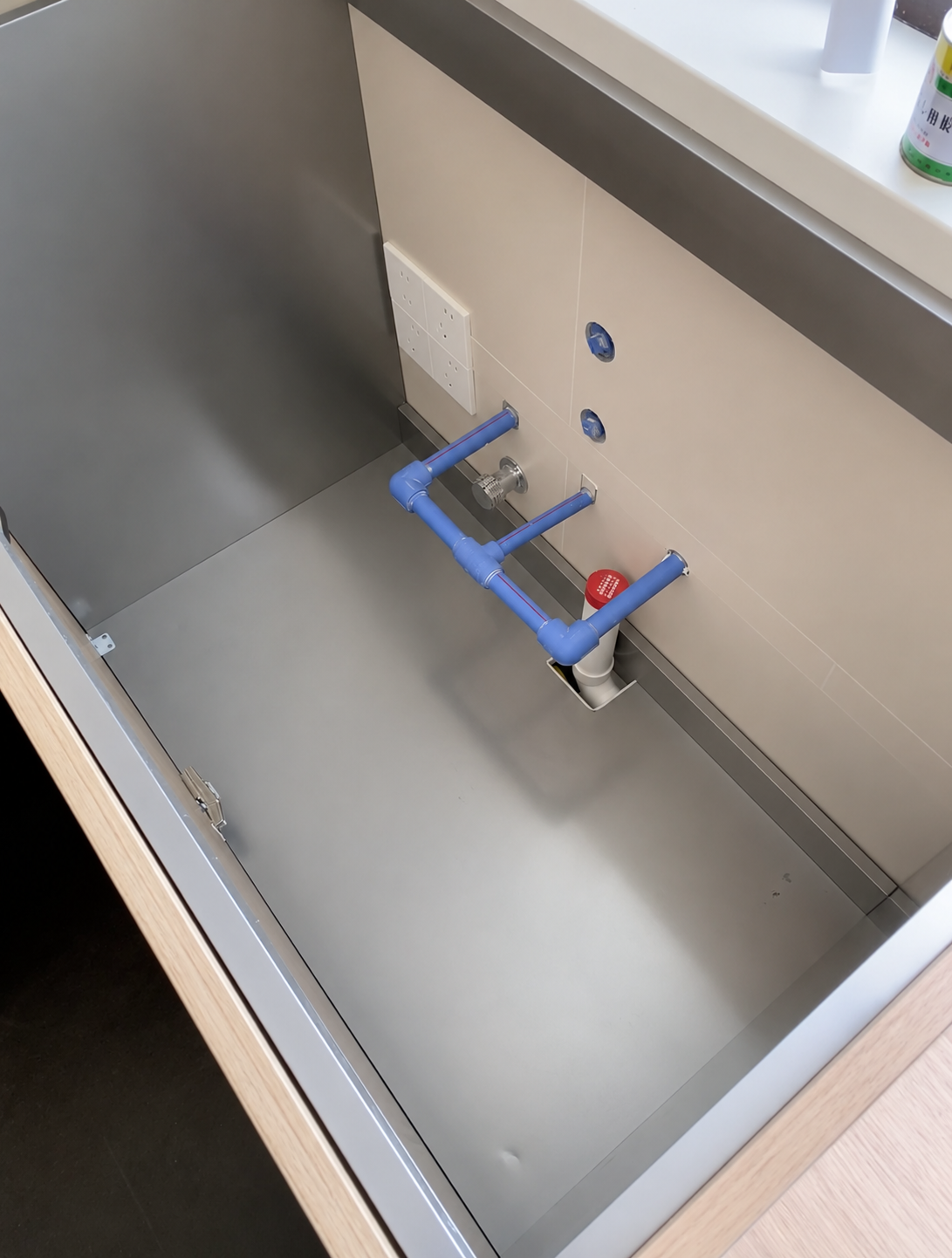
User-supplied reference images; platform overlays removed with AI. These views illustrate inspection points; retention requires an on-site assessment.
| Existing condition | Planning decision | Confirm before ordering |
|---|---|---|
| Sound box and suitable layout | Keep | Fixings, door compatibility and usable internal space |
| Damage confined to a repairable panel | Assess repair | Cause of damage, remaining structure and agreed repair scope |
| Widespread damage or unreliable joints | Assess replacement | Extent of removal and support for retained worktop or adjacent units |
| Sound box beside new work | Keep with a detailed connection | Levels, front alignment, filler, end panel and finish |
Assessment categories are a planning aid; confirm the condition of the actual installation before work.
Map the Boundary Between Old and New Kitchen Cabinets
A partial replacement can retain the main cabinet run while adding a tall cabinet or an appliance station where the layout needs it. Check the whole arrangement: a refrigerator can obstruct adjacent cabinet doors even when every cabinet fits against the wall.
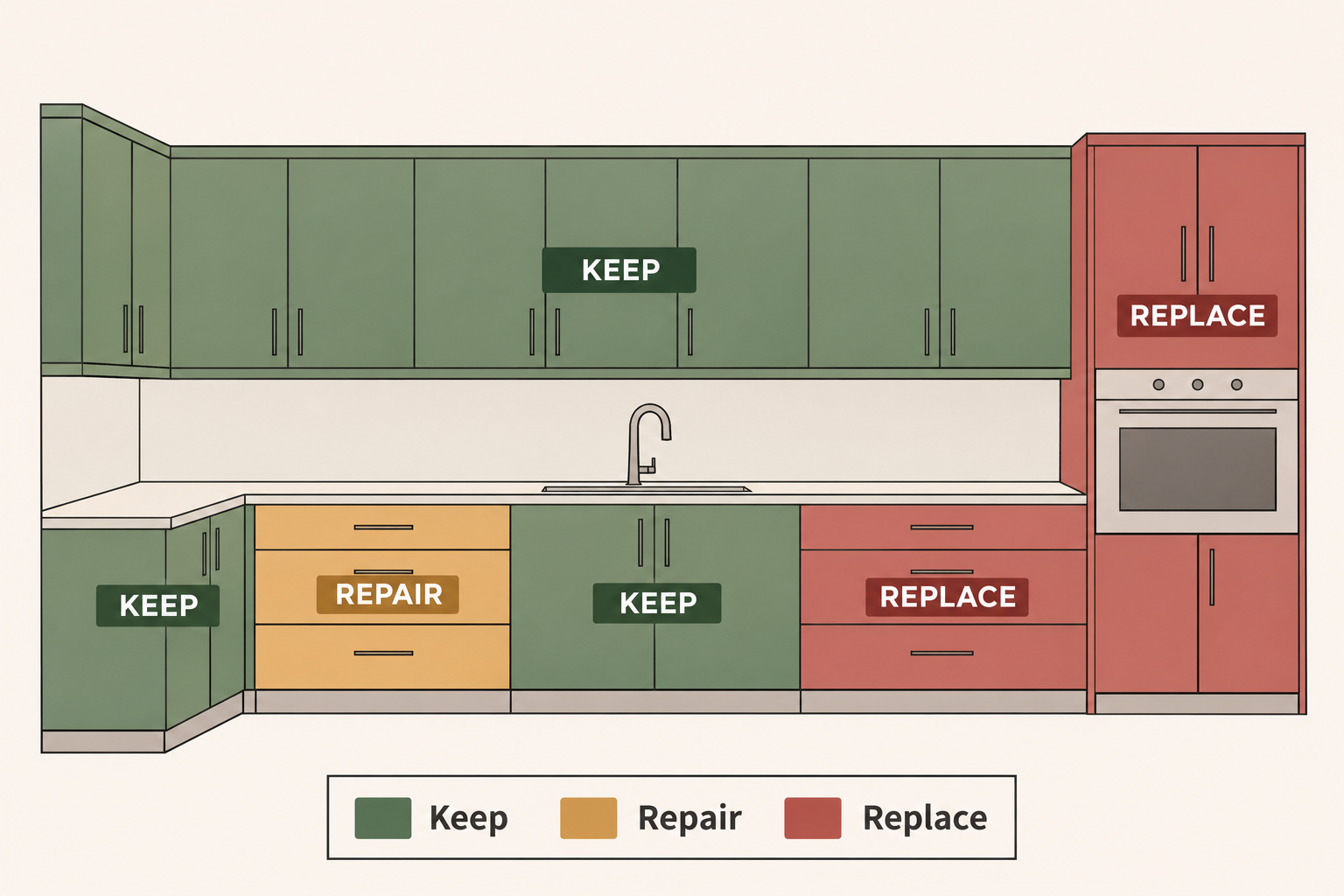
Number each cabinet on a measured plan and mark it Keep, Repair or Replace. For every connection to new custom kitchen cabinets, show the finished height, front alignment, depth, filler and exposed end. Assign responsibility for measuring and completing these joints before ordering. This turns a general renovation idea into a cabinet-by-cabinet scope.
Can New Cabinet Doors Fit Existing Cabinet Boxes
Replacement doors need measurements from the existing installation. Record the opening, door size, overlay or inset, hinge type, mounting positions and surrounding clearances. If the new front changes in size or weight, have the hardware supplier confirm the hinge selection and fixing arrangement.
Trial-fit one representative door and its hinges before ordering the full set. Check alignment, opening clearance and adjustment on the actual box. A nominal door width or a photograph cannot establish that the existing hardware will fit.
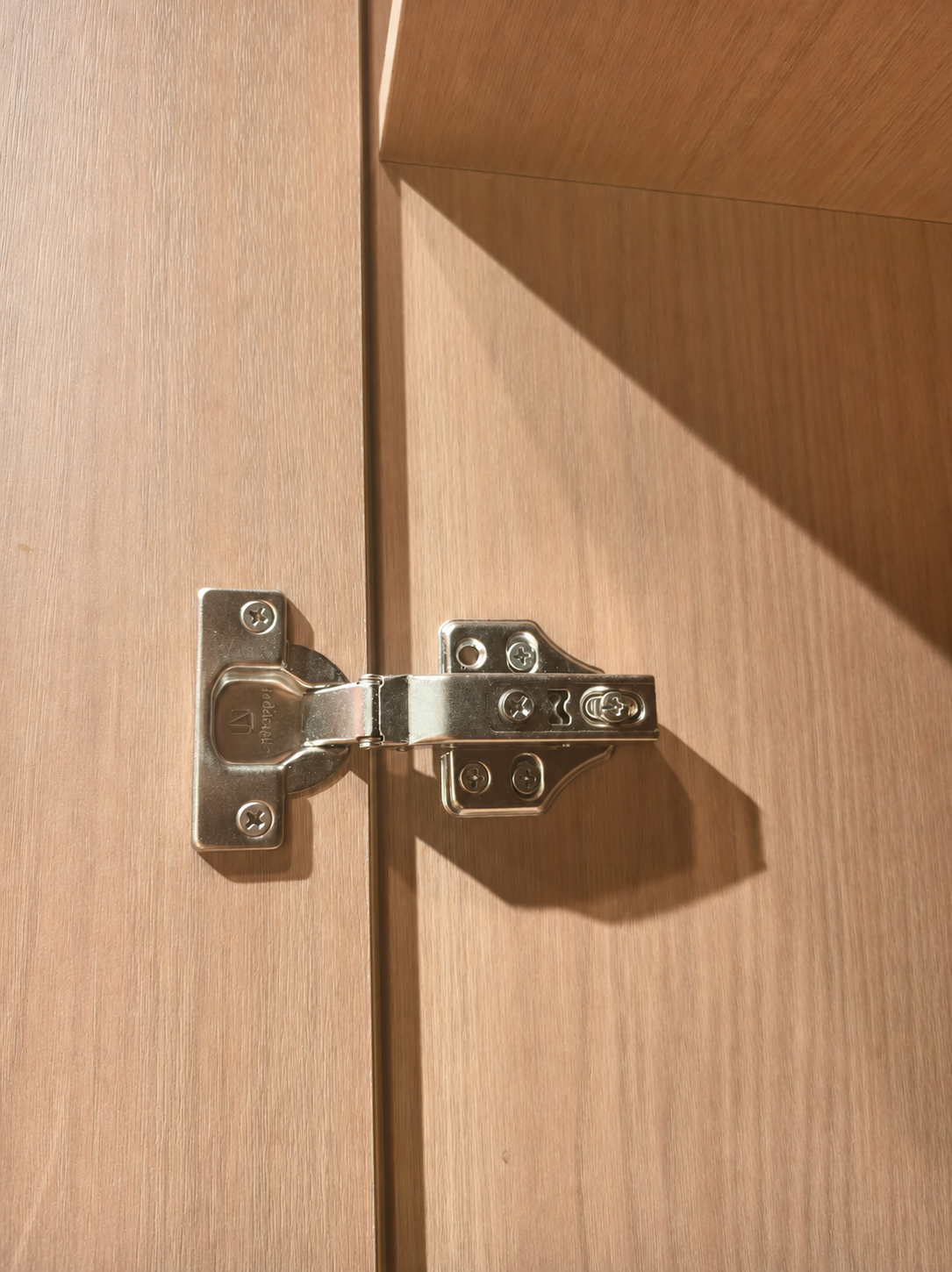

User-supplied reference images; platform watermarks removed with AI. Confirm the existing box dimensions, hinge positions and clearances on site before ordering new fronts.
Can You Keep the Worktop During Cabinet Replacement
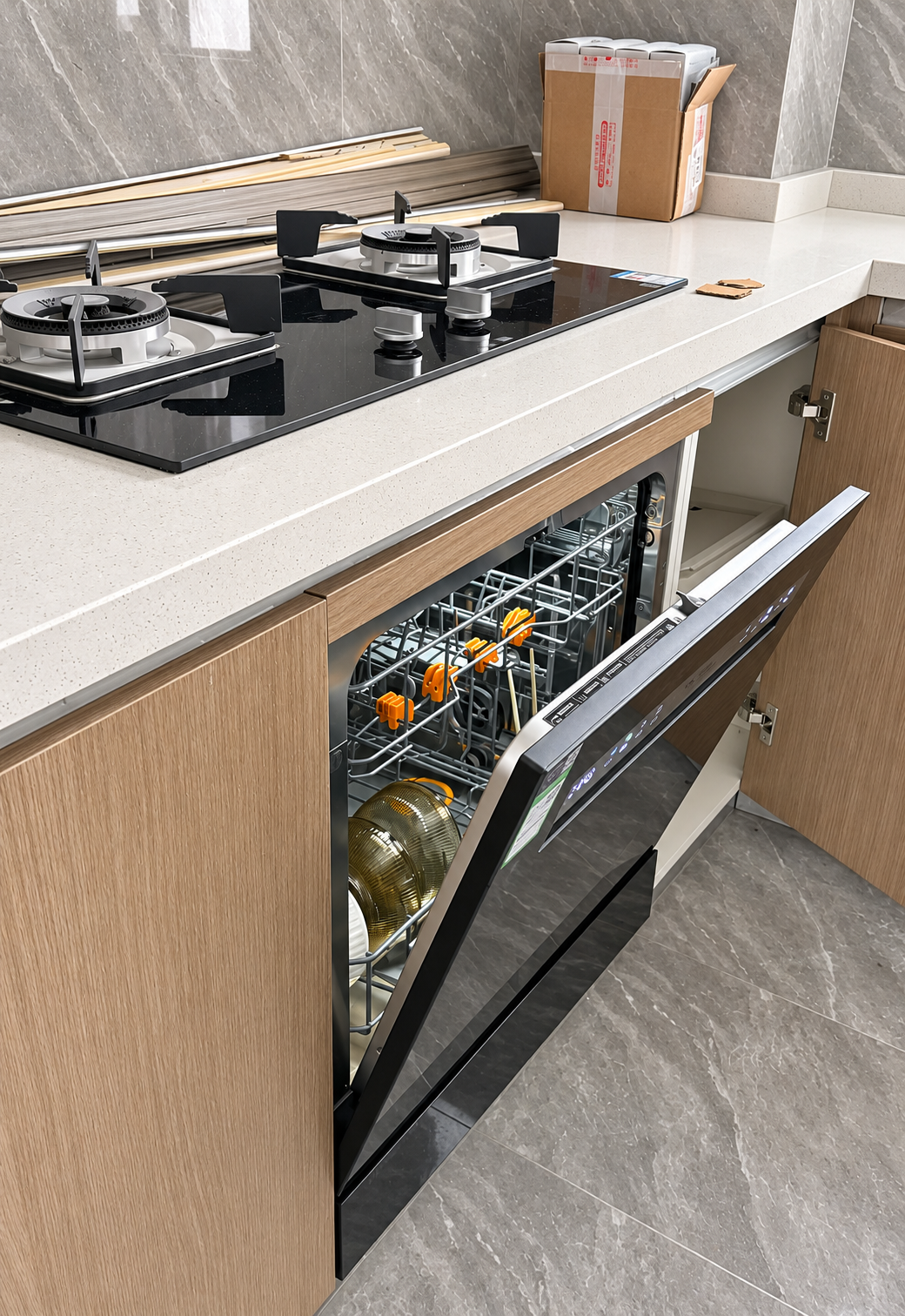
Keeping a worktop is easier to assess when the proposed appliance bay is already clear beneath it. An installation account describes adding a dishwasher in an existing opening, with local trim alterations instead of removing a complete cabinet box. That example does not establish that a bonded worktop can be safely lifted or left unsupported.
Ask the contractor to inspect the worktop material, joints, cut-outs and support before agreeing to retain it. Require a removal or support method for any box underneath that must come out. Identify who handles breakage, resealing and reinstatement in the quotation; keep worktop retention conditional until the contractor has checked it.
Plan Appliance Openings Before Ordering Custom Kitchen Cabinets
Fix the exact appliance model before changing its surrounding cabinets. Measure the usable opening at its narrowest and lowest points, including rails, worktop edges and flooring. Use the manufacturer’s installation drawing to coordinate the opening, ventilation, service routes and door movement.
Local changes may be enough: rebuild a hood cabinet to suit the selected hood, or detail the trim around an oven or dishwasher. Keep decorative fillers outside the required installation clearances and access zones. Confirm these interfaces on the approved drawing instead of treating a matching front as proof that the appliance fits.

Improve Storage Inside the Kitchen Cabinets You Keep
A sound cabinet may need better access rather than replacement. Retrofitting a dish pull-out can reorganize an existing cupboard into separate levels for utensils, bowls and cookware. Start with what the household needs to store and reach.
Before buying fittings, check the clear internal width, depth and height against the exact hardware model. Include hinges, pipes, drawer travel and access for cleaning. Record any drilling or panel changes, and ask the installer to confirm that the retained box can take the fittings.
Match New and Existing Kitchen Cabinet Finishes
You can coordinate finishes without repainting every cabinet. One renovation retained the existing wood base cabinets after painting the wall cabinets cream. A deliberate contrast can make the retained and renewed areas look intentional.
Compare physical samples beside the existing doors, exposed panels and worktop in the room’s lighting. Check sheen, texture and edge details as well as colour. If a close match is important, approve a sample door on site before production; allow for differences between new finishes and aged surfaces.

Compare the Full Cost of Partial Cabinet Replacement
Ask for separate prices for retained-cabinet repairs, new custom kitchen cabinets, doors, hardware, fillers, exposed panels and installation. Include removal, disposal, worktop handling, service alterations and making good. Cabinet buying accounts show how panels, handles, hinges and non-standard work can fall outside the headline price.
Allow for preparation and tools when comparing a repaint or DIY option with a supplied-and-installed order. Sanding and painting can consume substantial effort even when most cabinets remain. Compare the complete partial-replacement scope with a complete replacement quote; do not assume that retaining more components always gives the lower total.
Approve the Partial Kitchen Cabinet Replacement Plan
Before paying the production deposit, approve the retained-cabinet assessment, measured layout, appliance installation details, sample door or finish, and complete quotation. Resolve any measurements that depend on opening up the existing installation.
Name who protects the retained cabinets, completes each old-to-new joint and deals with damage or defects. At handover, check door and drawer movement, visible joints, appliance access and the agreed finishes. Where services were disturbed, have the relevant installer complete the required connection and functional checks.