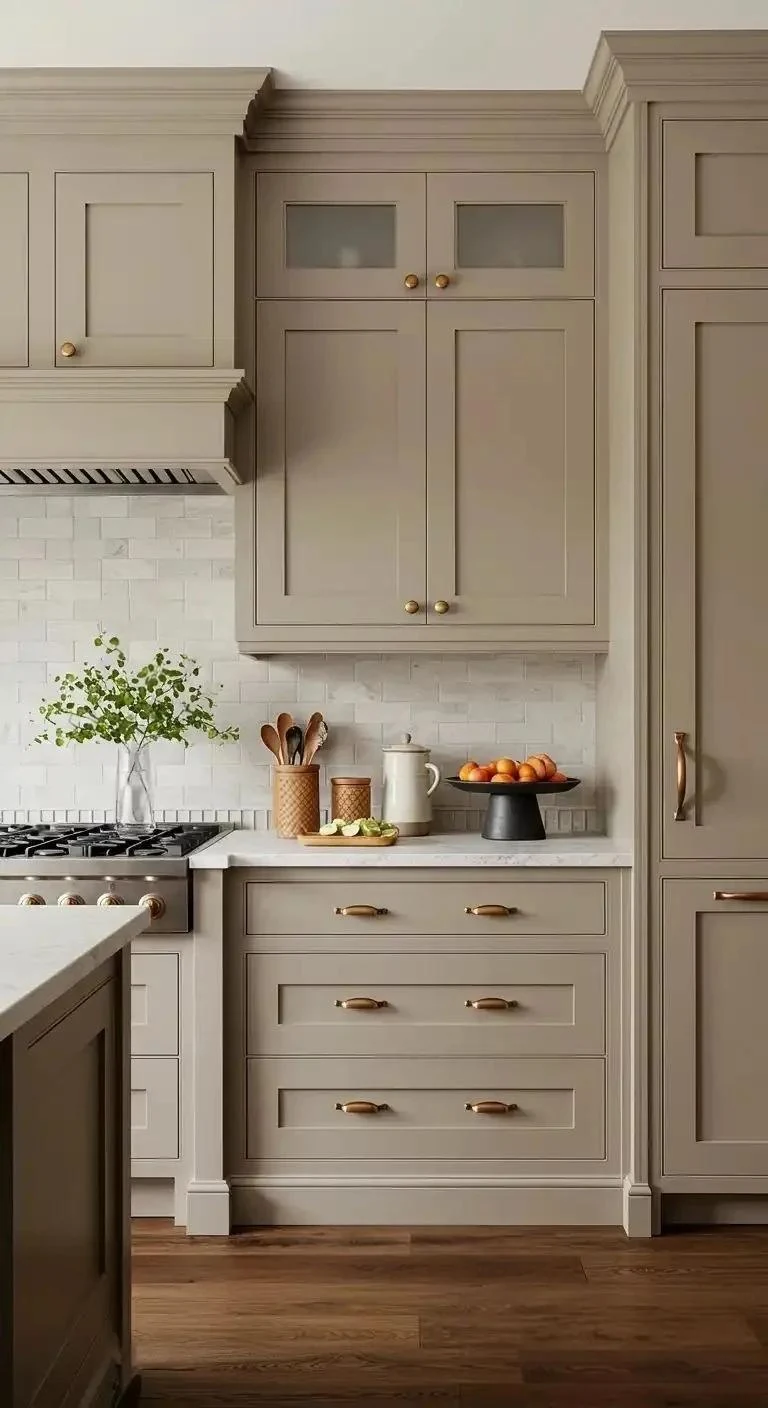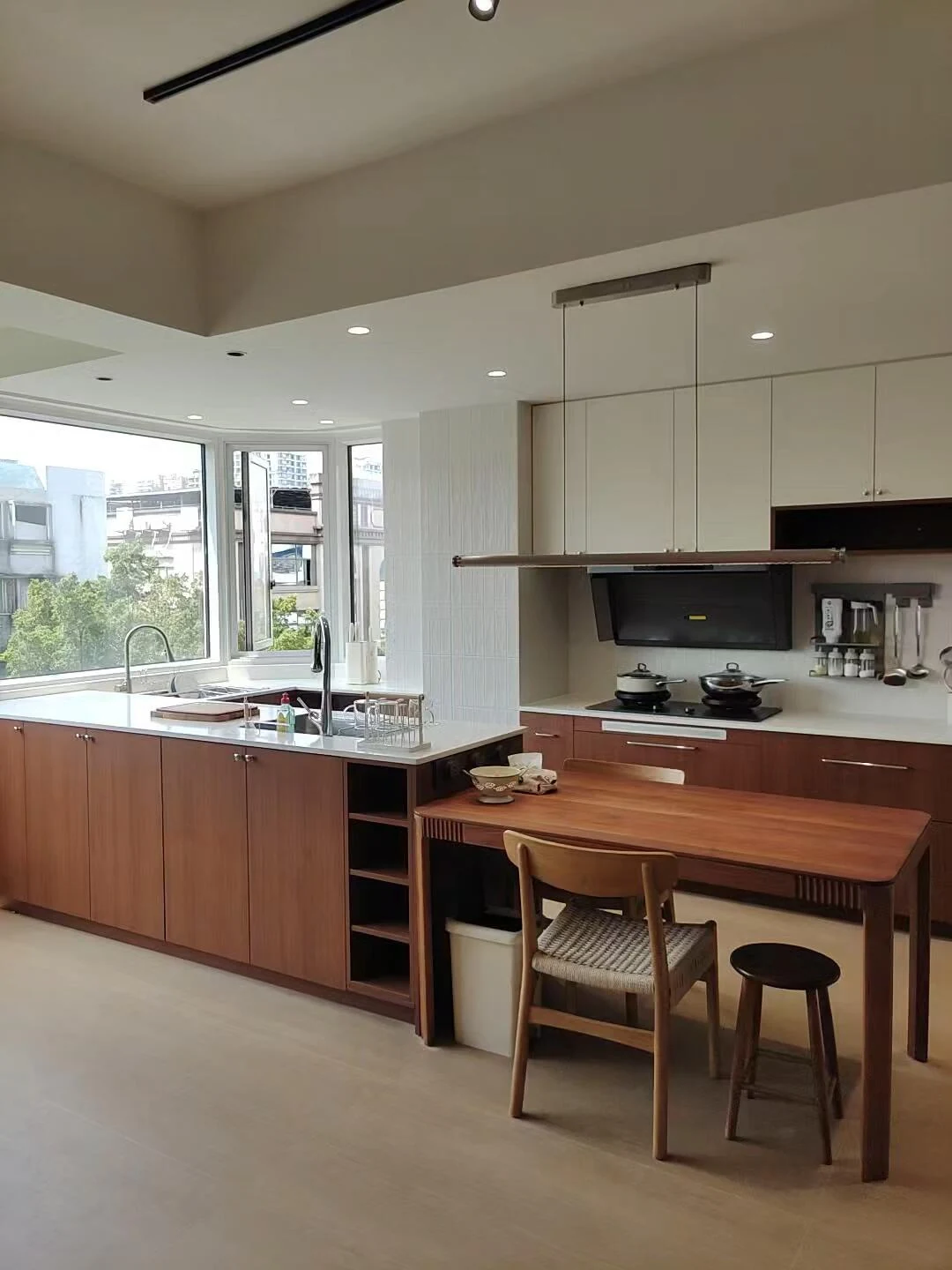
Start with the room, the destination and the team
Before asking for a price, name the rooms you want to include and the country where they will be installed. A kitchen-only order and a whole-home cabinetry package need different coordination. Include the property type, the stage of construction, the delivery address or region and the person who will measure and install the cabinetry. Photographs help explain the room, but they do not replace measured information.
For a homeowner, the most useful first appointment may be with the local installer. Establish who will check walls, floor levels, service positions and access to the building. For a contractor, start with the drawing issue and the room schedule. State whether the proposal is for a single residence, a repeated apartment type or several phases with different handover dates.
Keep a short decision register beside the brief. Separate confirmed information, proposed selections and open questions. A supplier can then identify assumptions rather than silently pricing a different version of the room. Use the cabinet quote template to make those decisions visible from the first inquiry.
Check the supplier and the scope of its service
Factory-direct describes a purchasing route; it does not define the complete service. Ask who will issue the quotation, develop the drawings, manufacture the cabinets, arrange inspection and coordinate shipping. Establish the contracting company and the communication route for technical changes. A clear relationship between these responsibilities matters more than a collection of attractive room pictures.
Ask for evidence that relates to your specification. A sample door is useful for judging a finish; a construction sample can show an edge, joint or drawer box; a completed drawing package can show how dimensions and services are coordinated. These pieces answer different questions. A showroom photograph alone cannot establish the material hidden behind the front.
At Arcaya, start by discussing the room list, available drawings and destination through Start a project. The written proposal should identify the agreed scope and manufacturing arrangement. Minimum order requirements, sample charges, payment stages, warranty coverage and document availability are confirmed for the proposed project rather than assumed from an editorial guide.

Send one brief that every proposal can follow
The inquiry package should contain the same information for each supplier: room plans, elevations where available, appliance models, the preferred front style, a material direction and the intended installation approach. Give every document a revision and date. If a dimension is not verified, label it as provisional and identify who will confirm it.
Include the items that tend to disappear between a room image and a quotation. These can include decorative end panels, fillers, toe kicks, cornices, lighting provisions, appliance panels, countertop supports and internal organizers. Say whether countertops, sinks, appliances, lighting equipment and installation are included, excluded or to be priced separately. A blank cell should not be interpreted as an included item.
Ask the supplier to return an exceptions list alongside the price. A useful exception identifies the affected cabinet, the proposed change and its consequence. For example, a different drawer system may alter the internal storage arrangement. Discuss that change before comparing totals; otherwise two apparently similar prices may describe different kitchens.
Review the specification before negotiating the total
Break the cabinet into its components: carcass, back, shelves, fronts, visible panels, edges, drawer boxes and fittings. Record the material and finish for each. A description such as premium plywood kitchen is too broad to resolve every part of the order. The spec-sheet guide explains the information worth requesting for each location.
Treat hardware in the same way. Record the brand, family or series, opening method and intended application. A soft-close hinge and a push-opening fitting are different decisions. The same brand name on two quotations does not establish that the fittings, accessories or included quantities are equivalent. Use the existing hardware comparison when reviewing alternative schedules.
Then discuss value engineering against the same baseline. Decide which visible surfaces, storage functions and construction details matter most. Ask for alternatives as separately identified options, with the change in scope written beside the change in price. This keeps the original brief available for comparison and makes an accepted substitution easy to carry into the drawings.
Make destination documentation a specific request
Identify the required product evidence early. For regulated composite wood products entering the United States, EPA describes TSCA Title VI certification and labeling requirements, including products incorporated into finished goods. Request documentation that relates to the specified panels and supply chain; an unrelated test report or an environmental slogan is not a substitute. See EPA's consumer guidance.
Keep emissions evidence separate from cabinet performance certification. KCMA describes A161.1 testing of cabinet structure, door and drawer operation, and finishes. If that certification is part of the brief, verify the applicable certified product rather than treating a mention of a test standard as proof of certification. KCMA explains the program here.
Have the local project team and customs broker confirm the documents relevant to the destination and shipment. The requirement belongs in the purchase brief, with a named person responsible for checking it before release. Arcaya's certificate availability for a proposed material or product must be confirmed in writing; this guide does not make a blanket certification claim.
Approve drawings and samples as one package
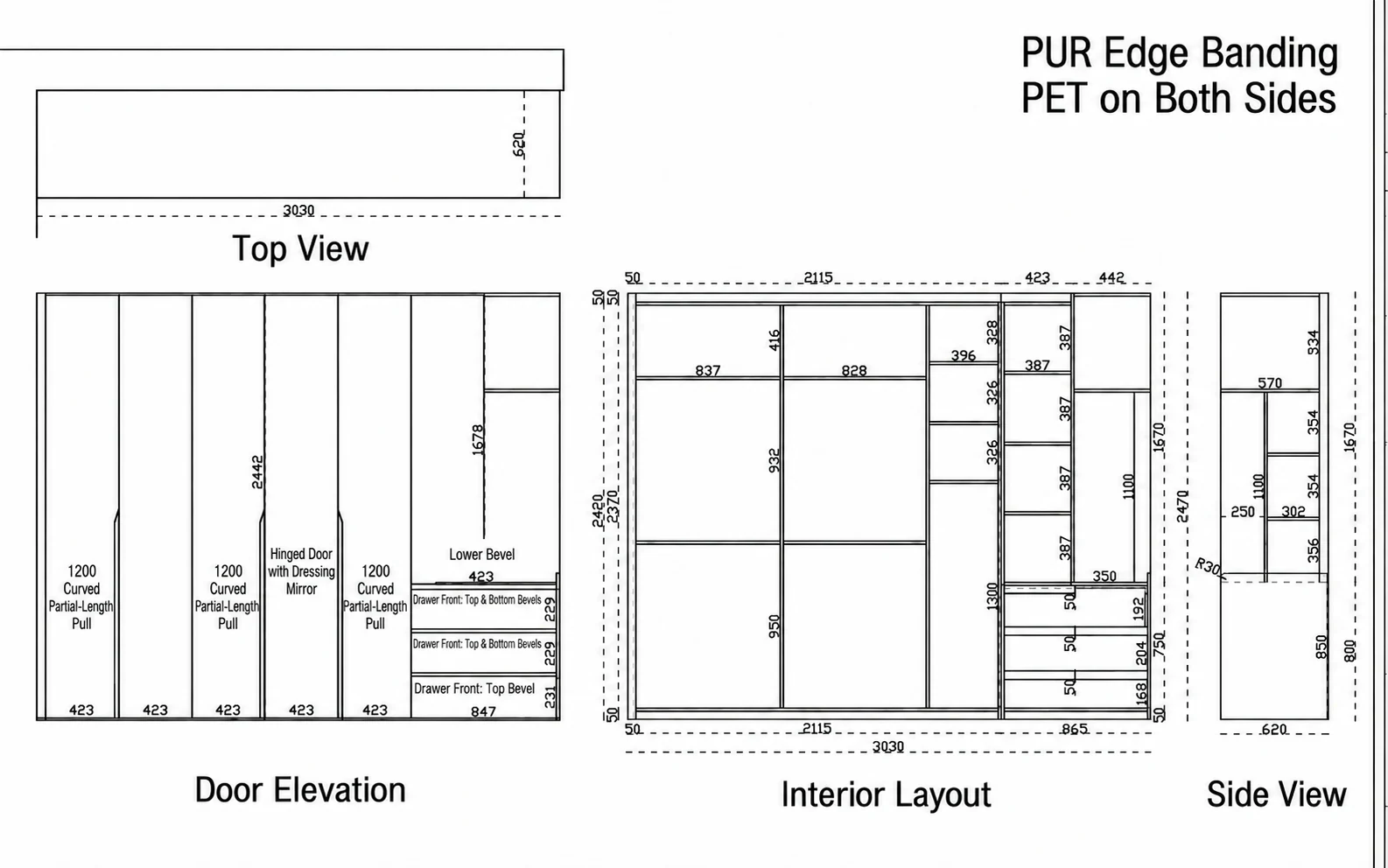
A production approval should connect the cabinet schedule to the drawings and physical samples. Check the drawing revision, room dimensions, appliance references, front divisions, opening directions, visible edges and service positions. Record what is approved and what remains open. Do not treat a general message saying the kitchen looks good as a substitute for an identified drawing approval.
Review a door sample in the lighting that matters to the room. Include its edge, back and opening detail in the discussion. With timber or veneer, agree how grain direction and natural variation will be assessed. With a plain-color finish, compare the sheen and neighboring surfaces as well as the color. Keep the approved sample identification with the purchase records.
Inspection should follow that same reference package. Define the checks, the stage at which they occur, the evidence to be recorded and how a discrepancy will be closed. Drawings, material schedules, photographs and packing references should describe the same order. Read the pre-shipment inspection guide for the practical review sequence.
Compare the cost of the delivered and installed scope
Separate the cabinet price from the other parts of the order. List sample and drawing charges where applicable, packing, origin transport, international freight, insurance, destination handling, customs clearance, current duties and taxes, local delivery, storage and installation. Mark the responsible party for each line. Ask what may change before shipment and what event fixes that cost.
Use the named delivery term with its exact place and the proposed shipment format. A port arrival is different from delivery inside a residence. Confirm unloading, restricted-access vehicles, stairs, lifting equipment and the last movement into the building with the relevant local service provider. Those tasks can change the practical cost even when the cabinet specification stays the same.
Do not calculate a purchase decision from a fixed tariff percentage copied from an old article. Ask a customs broker to check the current classification and treatment for the actual goods and route. For the cabinet shipping format itself, compare flat-pack and assembled options against the local installer's scope.
Plan backward from the installation sequence
Ask for a dated schedule built around decisions and dependencies: verified measurements, approved appliances, sample acceptance, drawing approval, production release, inspection, packing, shipment and local handover. The sequence matters because a late appliance change can reopen drawings and a missing approval can hold production. A single headline lead time does not explain these dependencies.
Keep shipping and local work visible on the same schedule. Confirm when the room will be dry, secure and accessible, where the cabinetry can be stored and who will receive it. The local installer and countertop fabricator should agree their order of work. Read the cabinetry timeline for a fuller planning framework; project dates remain subject to the written schedule.
The best first inquiry is therefore a coordinated request, not a request for an isolated cabinet price. Send the room information you have, identify what is still provisional and ask for a proposal that states its assumptions. That gives both sides a useful starting point for a practical, traceable overseas order.
Questions before you approve
Can a homeowner order directly?
The route can be discussed from a room list, destination and available drawings. Confirm the design, measurement, installation and commercial scope in the proposal; do not assume a minimum order or included service.
Do reference photographs prove what the supplier will manufacture?
No. Use references for the design direction, then agree drawings, material and fitting schedules, physical samples and the evidence needed for the order.
Is a factory price the complete project cost?
Compare the agreed cabinet scope with packing, transport, current destination charges, local delivery, storage and installation. Identify who arranges each item.
When should production begin?
After the required measurements, drawings, material selections and other release conditions have been accepted under the project approval process.
Details to confirm before approval
Approving cabinet samples remotely
Request clearly identified samples for the selected material and finish and compare them in the intended lighting where practical. Link each approved sample to its item code and drawing revision, confirm any remaining variations in writing, and record who approves the final production package. A photo or video can support the review but may not show texture or color accurately.